Portable Generator Engine Runs Too Fast: Eco-Throttle, Governor, and Service Checks
A portable generator engine runs too fast for two very different reasons: it may be operating normally for its design, or it may have a control problem that needs service. The key is to identify whether you have a conventional generator meant to run at a steady governed speed or an inverter generator with an Eco, Economy, or Eco-Throttle setting that should reduce engine speed at light load.
Safety first: Run a portable generator outdoors only, well away from doors, windows, and vents. Shut it down, let it cool, and remove all electrical loads before any inspection. Do not adjust governor springs, throttle-stop settings, or electronic controls unless the exact owner’s manual provides that procedure.
A generator that genuinely overspeeds can produce improper electrical output and may damage the engine or connected equipment. If the engine suddenly races, sounds dramatically different than usual, produces unstable power, or will not slow after you remove every load, turn it off using the normal control and arrange service.
First, confirm that “fast” is actually abnormal
Many open-frame, non-inverter portable generators are designed to run near a constant engine speed while operating. In those machines, the mechanical governor holds engine speed steady so the alternator can produce the intended AC frequency. Therefore, a generator running at full speed with no load is not automatically a generator high RPM problem.
Inverter generators work differently. Their electronics can maintain useful output while the engine speed changes with demand. Honda describes Eco-Throttle as a load-dependent governor system that adjusts engine speed to the power required. Champion’s inverter-generator manuals similarly describe Eco Mode as allowing a lower engine speed during periods of low or no electrical demand, then returning the engine to normal speed when a load is connected.
That distinction matters. If your conventional generator has no idle-control or economy feature, a steady fast engine sound may be normal. If an inverter generator used to slow down in Eco mode and now remains loud at no load, then portable generator eco mode not working is a reasonable concern.
Portable generator engine runs too fast: use this diagnostic order
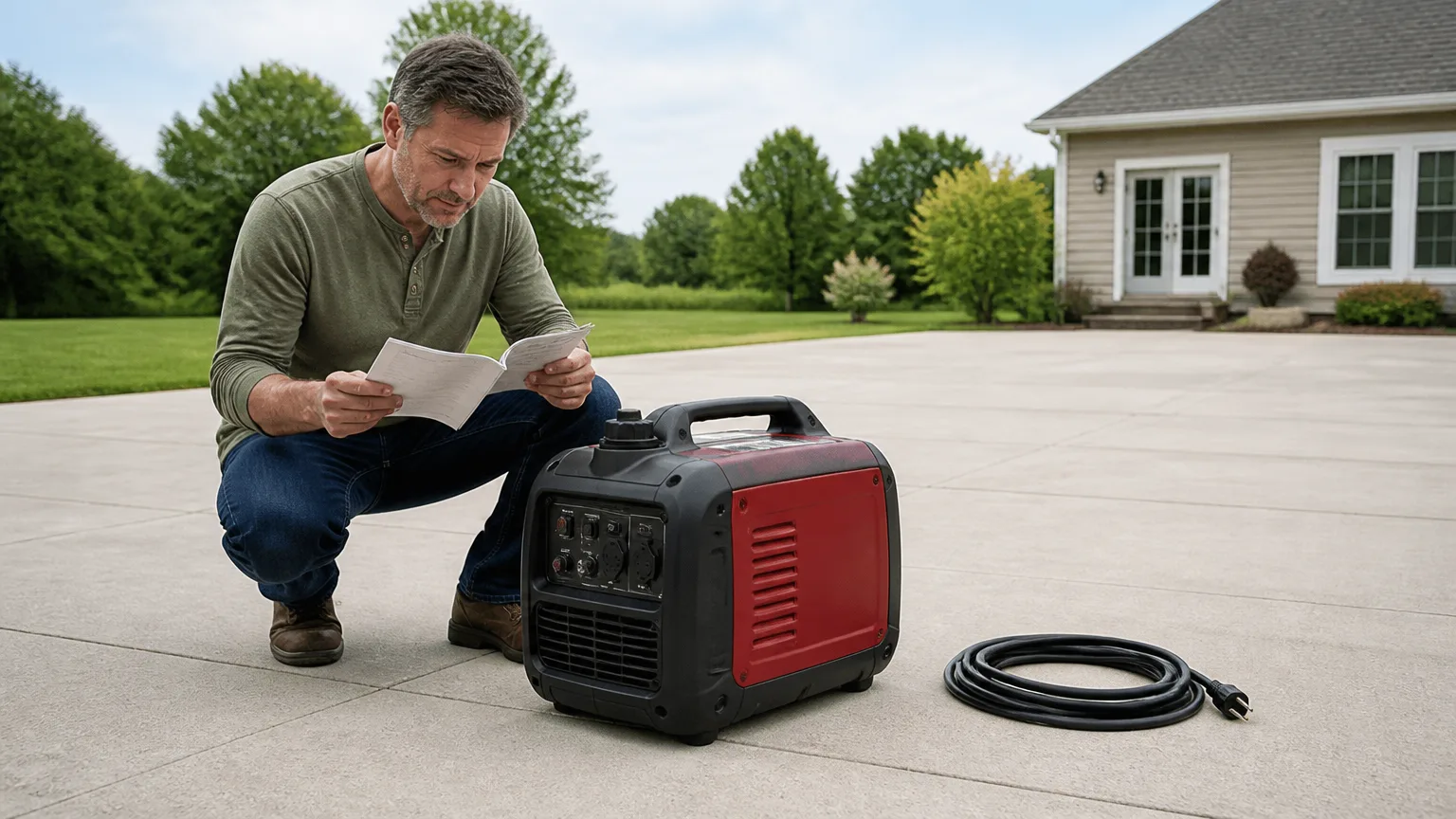
- Identify the generator type and control settings. Find the exact model number and read its owner’s manual section on Eco, Economy, Auto Throttle, or idle control. Do not assume that similarly sized generators use the same controls.
- Remove all loads. Unplug every appliance, extension cord, battery charger, RV connection, and transfer-equipment connection permitted by your setup. A connected item can create a small or intermittent demand even when it appears switched off.
- Allow a brief stabilization period. Start and warm up the generator only as directed by its manual. An inverter model may not immediately settle to its lowest speed after starting.
- Test the economy-control position. With no loads connected, set Eco or Economy mode as the manual directs. Then compare the engine response with the feature switched off. A normal change between the two positions suggests the control is responding.
- Check for a real electrical demand. If the engine slows only after you disconnect a cord or appliance, inspect that item separately rather than changing engine settings.
- Stop if speed seems excessive or output is questionable. Do not continue testing with sensitive electronics connected. Follow the model-specific service guidance.
Eco mode can be off, unavailable, or intentionally overridden
Before treating high engine speed as a fault, make sure the generator actually has an economy-speed feature. Some conventional models run at a governed operating speed all the time. Others have a switch that must be placed in the Eco or Economy position before lower-speed operation is available.
Also, an Eco feature is not necessarily intended for every situation. Manufacturer guidance for some inverter models says to switch economy operation off during high loads or loads that change suddenly. That means a generator can run at normal speed continuously by design when Eco mode is off, when a substantial load is present, or when the control system decides more engine speed is needed.
Look beyond the obvious appliance load
When diagnosing a generator running at full speed with no load, disconnect rather than merely switch off connected equipment. Battery chargers, power strips, RV converters, transfer equipment, and appliances with standby electronics may still draw power. A cord with a hidden branch connection can also leave a load on the generator.
Once everything is unplugged, test the generator by itself in a dry outdoor location. If Eco mode then works normally, reconnect loads one at a time. This is also a sensible way to isolate a separate power-demand issue. For more help when the generator becomes unstable after appliances are connected, see Portable Generator Runs Rough Under Load: Fuel Delivery, Altitude, and Load Checks.
When the governor may be involved
On many conventional generators, the governor is a mechanical system that responds to engine speed and moves the throttle to maintain the specified operating range. On inverter models, engine-speed control can involve the throttle body or carburetor linkage plus electronic controls, sensors, and an actuator. The exact layout varies widely by model.
A generator governor troubleshooting discussion should start with a boundary: do not bend linkages, stretch springs, defeat stops, or turn adjustment screws in an effort to make the engine quieter. Those parts are calibrated controls, not general-purpose adjustments. An incorrect change can create low frequency, high frequency, poor voltage regulation, hard starting, hunting, or engine damage.
Safe observations with the engine off
After the engine is stopped, cooled, and secured according to its manual, you can make a visual-only inspection where access is intended for the owner:
- Look for a disconnected, bent, obviously damaged, or obstructed external throttle/governor linkage.
- Check that the throttle-control area is not packed with grass, mud, rodent debris, or loose material.
- Inspect accessible wiring plugs near an Eco switch or control panel for obvious looseness or damage. Do not probe or repair wiring with the generator energized.
- Check the air-filter service condition and engine-oil level using the manual’s instructions.
- Look for signs of impact damage, loose covers, fuel leakage, or missing fasteners.
These checks can reveal an obvious external issue, but they cannot confirm governor calibration or diagnose an electronic control failure. If you find a damaged linkage, disconnected spring, or questionable wiring, leave the engine off and use an authorized service professional. Reassembly and adjustment are model-specific.
Do not use sound alone to judge engine speed
Engine sound is useful as a clue, but it cannot reliably tell you whether speed is within specification. Enclosure panels, exhaust tone, elevation, background noise, and a comparison to another model can all make a generator seem faster than it is.
If your owner’s manual provides an acceptable output frequency or engine-speed specification and you have an appropriate meter, use only the manual’s test method. If the manual does not give a user-level verification procedure, do not improvise one. A service shop can check governed speed, output frequency, voltage behavior, and control-system commands with the right equipment.
Pay particular attention if high engine speed is accompanied by lights flickering, an overload indicator, breakers tripping, a burning smell, vibration, or voltage concerns. Those symptoms move this beyond an Eco-mode question. Our guide to Portable Generator Runs but Has Low Voltage: Meter Checks and When to Seek Service covers safe next steps for one common output problem.
Symptoms that point to a service-level fault
Arrange professional diagnosis rather than further owner adjustment when one or more of these conditions applies:
- The engine races immediately after starting or continues to accelerate.
- The engine does not slow at no load with Eco mode enabled on a model designed to idle down.
- The Eco switch position makes no difference and all loads have been physically unplugged.
- Engine speed rises and falls repeatedly instead of settling, especially if output is unstable.
- A governor linkage, spring, throttle component, connector, or wire is damaged or missing.
- The generator has been dropped, flooded, stored with rodent activity, or recently serviced before the symptom began.
- You suspect incorrect frequency or voltage but cannot verify it using the exact manual.
For a sudden overspeed event, do not restart repeatedly to “see if it clears.” Record the model number, fuel type, control-switch positions, connected loads, warning lights, and the sequence of events. That information can help an authorized technician diagnose whether the cause is mechanical, electrical, or related to the generator’s inverter-control system.
What not to do during a high-RPM complaint
- Do not force the throttle arm by hand while the engine is running.
- Do not adjust governor springs or speed screws based on another generator’s settings or an online video.
- Do not keep sensitive appliances connected while output speed or quality is in doubt.
- Do not inspect moving linkage, wiring, or the alternator area with the engine running.
- Do not refuel a running or hot generator.
- Do not operate the generator in a garage, shed, porch, or near building openings.
The practical takeaway
A portable generator engine runs too fast only after you compare its behavior with the design of that exact model. Constant high speed can be normal on a conventional generator. On an inverter generator, a failure to slow at no load may be as simple as Eco mode being switched off or an appliance still drawing power. But a true overspeed condition, a nonresponsive economy control after load isolation, damaged governor parts, or unstable output calls for model-specific professional service rather than adjustment by trial and error.
Use the owner’s manual as the final authority for your generator’s controls and inspection limits. That is the safest way to separate normal operating noise from a fault that deserves attention.