Portable Generator Choke Lever Is Stuck: Linkage, Cable, and Carburetor Checks
When a portable generator choke lever is stuck, the problem may be as simple as a jammed external control or as involved as a binding choke shaft inside the carburetor. The important part is not to force the lever. A hard pull can bend a linkage rod, damage a plastic control, kink a cable, or turn a manageable repair into a carburetor replacement.
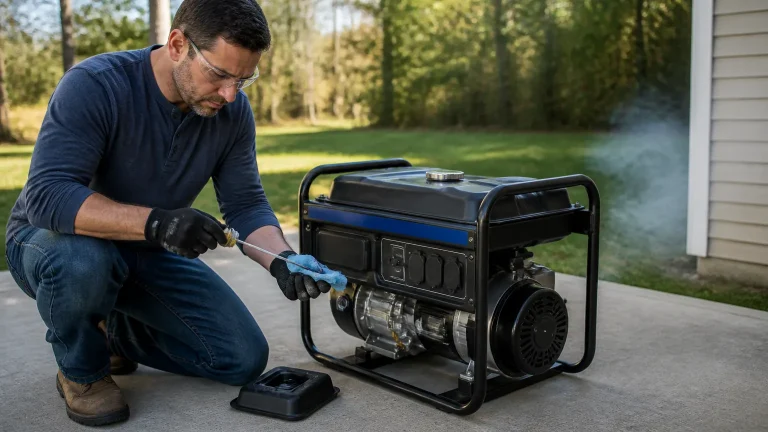
Safety first: Shut the generator off, unplug all loads, let the engine cool, and work outdoors away from ignition sources. Never run a portable generator indoors, in a garage, or near openings where exhaust can enter a building. Do not spray flammable chemicals on or near a hot or running engine.
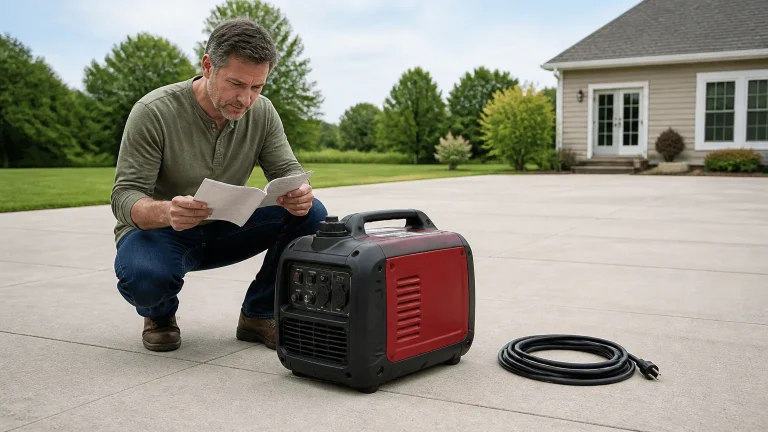
A choke enriches the fuel mixture for cold starting by reducing airflow. Once the engine starts and warms, the control normally moves toward RUN or OPEN. Exact labels and control designs vary: some generators use a lever or knob, some use a cable-operated panel control, and some combine choke operation with a rotary starting dial. A few models do not use a manual choke at all. Check the owner’s manual for your exact model before disassembling anything.
What a stuck choke control can tell you
The symptom matters. A lever that will not move at the panel is different from a lever that moves freely while the carburetor choke plate remains still. Likewise, a choke that moves but will not stay in position may point to a loose fastener, worn detent, disconnected cable, or misplaced linkage spring.
If the control is stuck in the closed or CHOKE position, the engine may start cold but run poorly, smoke, load up with fuel, or stall as it warms. If it is stuck open or in RUN, a cold engine can be difficult to start. Do not assume the choke itself is the only cause of those running symptoms; fuel condition, carburetor deposits, air-filter condition, and ignition or governor issues can overlap.
If the generator starts but later runs unevenly under connected appliances, see our guide to portable generator rough-running checks under load. Address the stuck control first rather than repeatedly cranking or operating the engine with an incorrect choke setting.
Portable generator choke lever is stuck: use this diagnostic order
- Confirm the generator is fully shut down and cool. Disconnect appliances and extension cords. Turn the engine switch off. If your model has a fuel shutoff valve, use it as directed in its owner’s manual. Give hot engine and muffler parts adequate time to cool.
- Identify the control style. Look for a direct-mounted choke lever or knob near the carburetor, a panel-mounted lever connected by cable, or an integrated start/run dial. Do not pull apart an integrated control simply because it does not resemble a separate choke lever.
- Inspect the outside of the control before applying force. Look for dirt, a cracked plastic guide, a loose screw, a bent bracket, a pinched cable, a missing return spring, or interference from the generator frame or shroud.
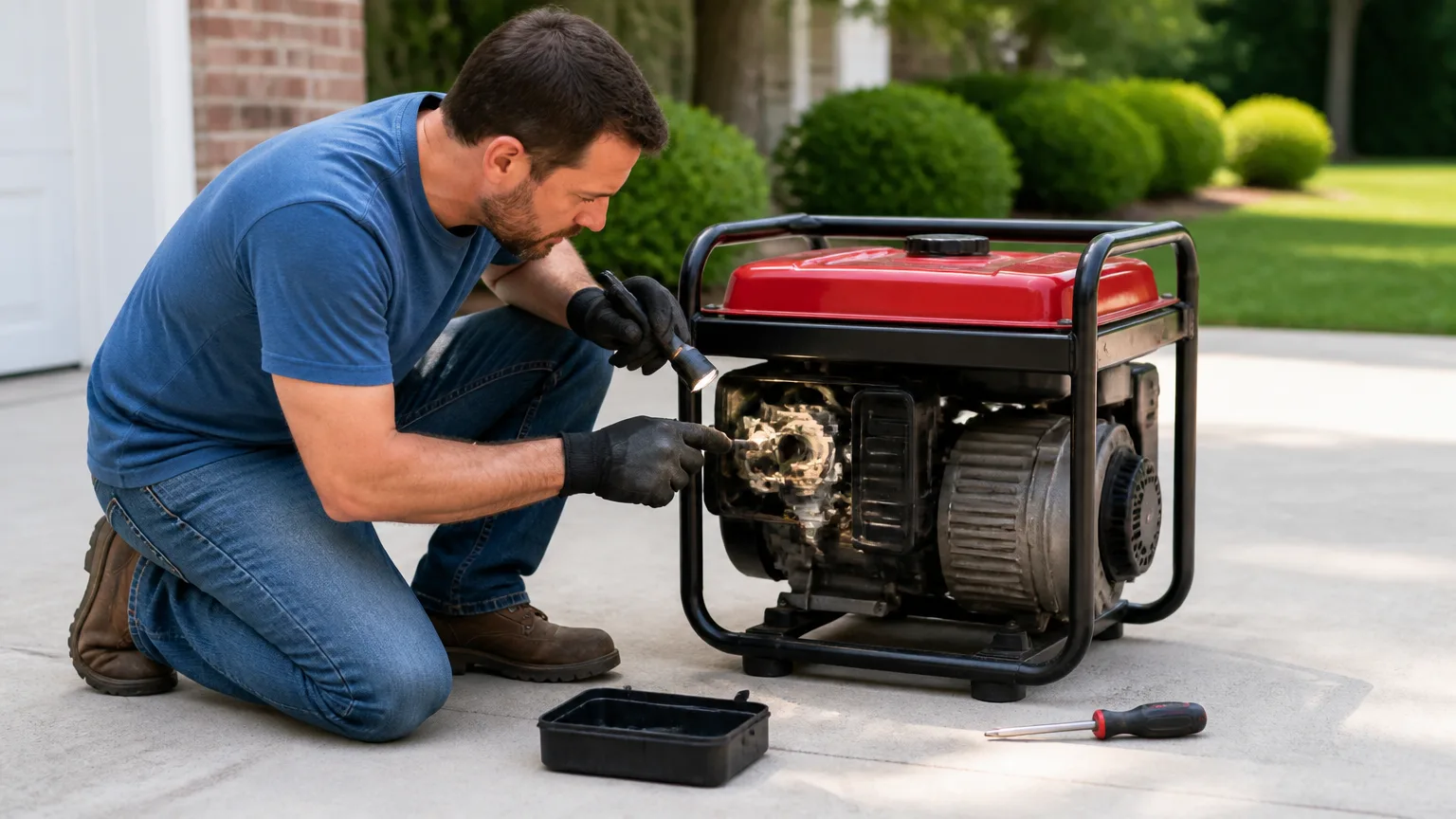
- Watch the mechanism while gently moving the control. With the engine off, remove only the access cover or air-cleaner cover if the manual permits it. Use a flashlight. A helper can move the control gently while you observe whether motion reaches the carburetor-side linkage.
- Separate an external-control problem from a carburetor problem. If the outer lever is immovable, begin at its pivot, cable, or control housing. If the outer lever moves but the choke plate does not, inspect the cable end, rod, clip, and linkage connection. If the linkage reaches the carburetor but the choke shaft will not rotate, stop before forcing it.
- Reassemble correctly and test only according to the manual. Make sure no cover, cable, spring, or wiring is trapped. Follow the model-specific starting sequence, including the correct choke position for a cold or warm engine.
Check the lever, knob, or start dial first
A generator choke will not move when the visible control is physically obstructed, damaged, or bound at its pivot. This is common after transport, storage in dusty conditions, an impact, or a shroud that was reinstalled out of position.
Look for simple interference
- Debris packed around the lever slot or control panel opening.
- A control knob rubbing on a distorted shroud or panel.
- A mounting screw that has shifted the control bracket out of alignment.
- A cracked plastic lever flexing against its housing.
- A start dial that is being turned outside its intended range.
Clean loose dirt with a dry brush or cloth. Do not pry aggressively against plastic controls or use pliers on a lever designed to be moved by hand. If the part is cracked, badly distorted, or still binds after obvious debris is removed, replacement or authorized service is usually more sensible than forcing it.
How to inspect a portable generator choke cable stuck in place
On generators with a remote control, a portable generator choke cable stuck condition can occur at the lever end, within the cable housing, or at the carburetor end. The cable should follow a smooth route. Tight bends, crushed sections, corrosion, or a cable housing pulled from its retaining clip can make the control feel locked or unusually stiff.
Start with a visual inspection from one end to the other. Check that the cable sheath is seated in its brackets and that the inner wire has not frayed or slipped free from its clamp. Also look for a cable routed against a sharp sheet-metal edge or trapped beneath a cover.
If the panel lever moves but the cable housing shifts instead of transferring movement, the cable retainer may be loose or broken. If the cable reaches the carburetor but the cable end does not move the linkage through its intended travel, a clamp, connector, or linkage attachment may be out of place.
Do not cut, shorten, heat, or improvise a cable repair. Cable adjustment and routing can be model-specific, and an incorrectly adjusted control may leave the choke partly closed or prevent a proper cold start. Use the exact owner’s manual, parts information, or an authorized service professional for damaged cables and integrated choke controls.
Inspect the generator choke linkage problem at the carburetor
The linkage is the small group of levers, rods, clips, springs, and pivots that transfers movement from the control to the carburetor choke shaft. Depending on the generator, it may be visible after removing the air-cleaner cover, or it may sit behind shrouding that should not be removed without service information.
What to look for
- A linkage rod that has come out of its hole or guide.
- A spring that is missing, stretched, or hooked into the wrong location.
- A bent rod that rubs against the carburetor body, air box, or engine shroud.
- A retaining clip that is loose, missing, or not seated.
- Heavy dirt, corrosion, or varnish-like residue restricting a pivot.
- A choke plate that appears to contact the carburetor bore or air-cleaner assembly abnormally.
Move the external control only gently while observing the linkage. Normal movement should be deliberate and coordinated: the control, cable or rod, choke lever, shaft, and choke plate should move together. A control that feels free but produces no movement at the choke plate commonly indicates a disconnected linkage or cable. A linkage that moves until it reaches one stiff point may indicate interference or a seized carburetor-side pivot.
Take clear photos before disturbing springs, rods, or clips. Their positions are easy to misremember, and incorrect reassembly can create a new starting problem. If you cannot confirm how the linkage should be arranged from the correct manual or parts diagram, stop and arrange service.
When the choke shaft or plate is binding inside the carburetor
If the linkage reaches the carburetor but the choke lever itself will not pivot, the choke shaft may be corroded, contaminated, bent, or internally damaged. This is the point where “how to free a stuck generator choke” should not mean applying more leverage.
Carburetor hardware is small and easily damaged. Forcing the shaft can deform the choke plate, damage the shaft bore, or loosen parts that should not enter the intake path. Avoid spraying aerosol cleaners into the carburetor while the generator is hot, energized, or running. Do not operate the generator with the air-cleaner assembly removed unless the exact owner’s manual specifically directs that procedure.
A carburetor that needs removal, internal cleaning, choke-shaft service, or replacement is a good reason to use an authorized service professional. This is especially true if there is fuel leakage, a strong fuel odor, damaged fasteners, or uncertainty about reassembly. For fuel escaping from the carburetor, follow the safer next steps in our article on portable generator carburetor fuel leaks.
Do not confuse a normal choke setting with a fault
Cold engines often need choke for starting, while a warm engine may need little or none. Manufacturer guidance commonly calls for moving the control gradually toward RUN after the engine starts and stabilizes. A generator that briefly falters during that transition may need a short warm-up period; it does not automatically prove the linkage is defective.
However, an engine that will run only with the choke partly or fully closed after it is warm is not behaving normally. That can indicate restricted fuel flow, stale fuel effects, carburetor contamination, or an air-related maintenance issue. Do not hold the choke in a forced position as a permanent workaround. Resolve the underlying cause using the owner’s manual or qualified service.
When to stop troubleshooting and seek service
Arrange professional help when the choke control is part of an integrated dial, the cable is frayed or kinked, the linkage arrangement is unclear, the carburetor choke shaft is seized, or a fuel leak is present. Also stop if you find bent carburetor parts, missing springs or clips, damaged shrouds, or signs that a previous repair altered the original control system.
Once repaired, verify that the choke moves smoothly through its intended range with the engine off. Then use the manual’s exact start and warm-up procedure. Keep the generator outdoors, dry, and clear of doors, windows, vents, and combustible materials whenever it is operated.