Dual-Fuel Portable Generator Will Not Run on Propane: Fuel Selector, Tank, and Regulator Checks
If a dual fuel generator will not run on propane but starts and runs normally on gasoline, begin with the propane-specific items rather than assuming the engine has failed. The most likely areas are the fuel-selection controls, propane cylinder supply, hose connection, regulator, and the model’s propane starting sequence.
Safety first: Work outdoors in a dry, well-ventilated area with the generator switched off, cooled down, and disconnected from appliances before inspecting fuel connections. Never run a portable generator indoors, near openings, or while investigating a suspected propane leak. If you smell gas or find a leak, close the cylinder valve and do not start the generator until the problem is corrected.
Do not try to “tune” or disassemble a propane regulator. Dual-fuel fuel systems vary by model, and an incorrect adjustment or non-approved hose can create a fire, gas-leak, or no-start hazard. Use the startup and shutdown instructions in the exact owner’s manual for your generator; if the manual differs from the steps below, follow the manual.
Why a Generator Runs on Gas but Not Propane
When a generator runs on gasoline but not propane, it is reasonable to focus first on the LP fuel path. A gasoline start does suggest that some shared systems, such as basic engine rotation and ignition, may be working. It does not prove that every engine-related cause is eliminated, though. Low oil shutdown, a fouled spark plug, air-filter restriction, incorrect choke use, or a starting-battery issue can still affect operation depending on the model and the conditions.
Propane operation adds several components that gasoline mode does not use: a propane cylinder, cylinder valve, connector, hose, regulator, possible fuel shutoff solenoid, and the LP side of the fuel selector. A missed position, loose connector, kinked hose, empty cylinder, or inactive regulator solenoid can keep fuel from reaching the engine.
Dual Fuel Generator Will Not Run on Propane: Check in This Order
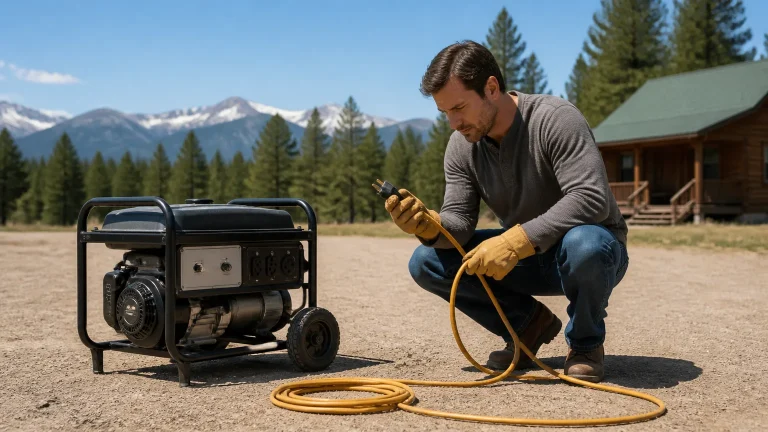
- Move the generator outdoors and remove electrical loads. Unplug tools, appliances, and extension cords. A no-start diagnosis is easier with no connected load, and the generator should not be connected directly to a building unless a properly installed transfer arrangement is in place.
- Stop the engine and let hot parts cool. Do not handle the regulator, hose, or cylinder connection beside a hot muffler. Keep the cylinder and hose clear of the exhaust stream.
- Select propane at the generator. Confirm the fuel selector is actually set to LPG/LP/propane, not gasoline or OFF. On some generators, moving a selector cover only exposes the selected fuel valve; the valve itself must then be turned to its open position. Selector layout and direction vary, so do not rely on another generator’s control layout.
- Check the propane cylinder and its valve. Use a suitable propane cylinder in the upright position. Confirm it contains fuel, is not visibly damaged, and has its valve fully open as directed by the generator manufacturer. A recently used, nearly empty, or very cold cylinder may not supply the needed vapor pressure.
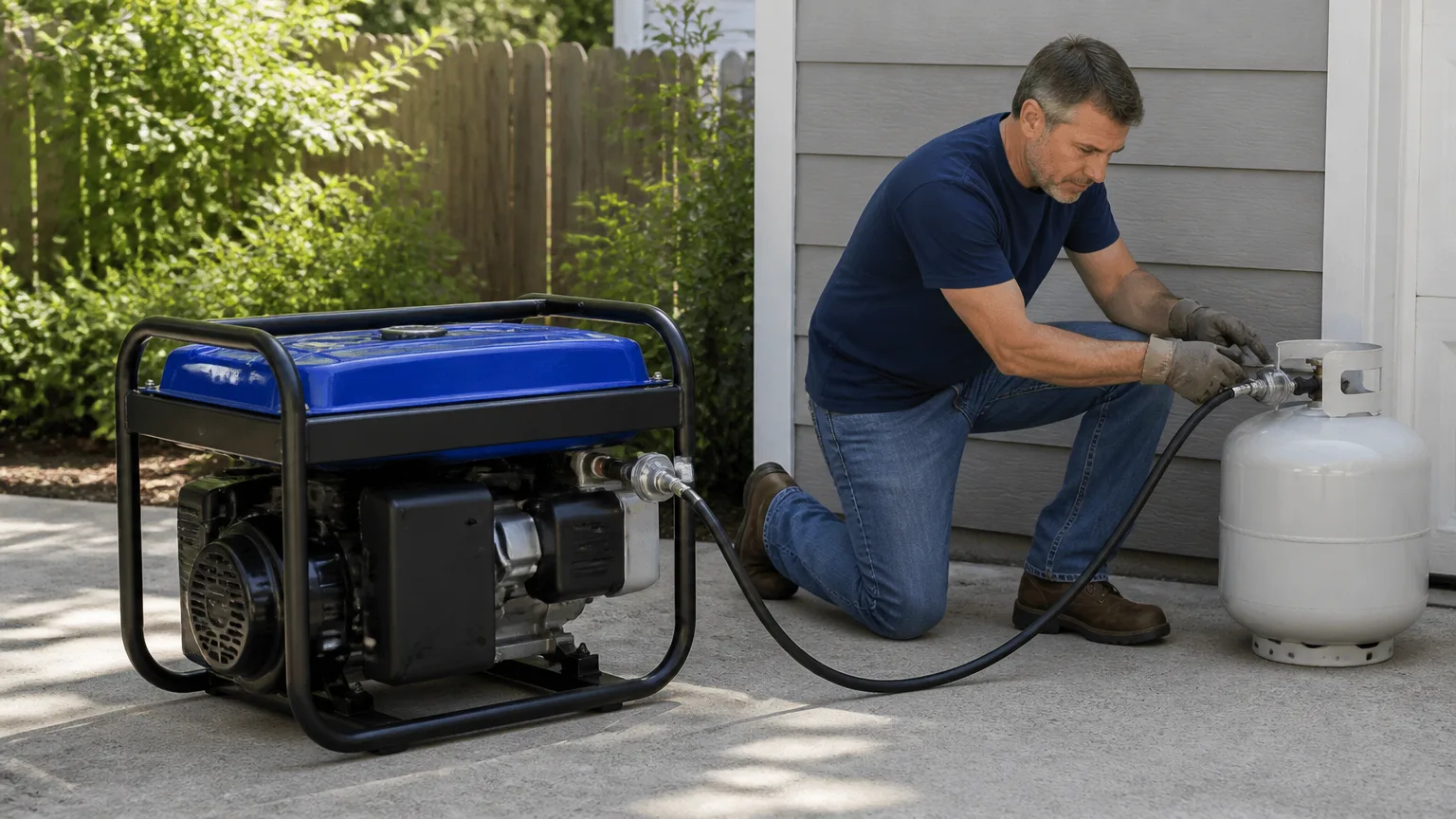
- Inspect the supplied hose and regulator assembly. Make sure the correct hose/regulator is connected to both the cylinder and generator inlet or regulator connection. Look for sharp bends, pinches, crushing, abrasion, loose fittings, or damage. Do not substitute an unapproved regulator or adapt fittings to make a connection work.
- Perform a leak check before starting. With the generator off and cool, open the cylinder valve and use a soapy-water solution at the connection points if your owner’s manual permits this method. Growing bubbles indicate a leak. Close the valve and arrange repair or service; do not attempt to start the generator.
- Use the propane-specific starting sequence. Recheck the engine switch, fuel-control position, choke position, and starting method in the owner’s manual. Propane starting can require a different choke sequence than gasoline starting. Do not keep cranking continuously; follow the manual’s limits and allow the starter to cool between attempts.
- Check model-specific regulator wiring. Some dual-fuel inverter generators use an electrical connector at the regulator to operate a propane shutoff solenoid. If your exact manual or manufacturer support instructions show such a connector, verify that it is fully seated with the generator off. Do not probe wires, bypass the solenoid, or jumper safety controls.
Fuel Selector Checks That Are Easy to Miss
A fuel-selector issue is one of the simplest explanations for a dual fuel generator will not run on propane complaint. The selector may be a rotary dial, sliding cover, lever, or separate fuel valve. Its job is to route the generator toward one approved fuel source at a time.
Confirm the selector and valve are both set for LP
On certain designs, selecting “LPG” is a two-part action: slide or turn the selector to uncover the LP control, then open that LP valve. It is possible to have the selector cover moved toward propane while the actual propane valve remains closed. Other models use a single dial or switch. Check the labels on your unit and compare them with the owner’s manual illustrations.
Do not try to run both fuels at once
Dual-fuel generators are designed to operate on one selected fuel at a time. Do not leave a gasoline valve open because the generator will not start on propane, and do not attempt to blend fuel sources. Return the controls to the documented propane position before making another starting attempt.
Use the correct shutdown method
Some models have controls that behave differently in propane mode than in gasoline mode. For example, an engine switch may not by itself stop a generator operating on propane. Follow the exact manual’s shutdown order, which may require closing the propane cylinder valve and allowing the engine to stop from fuel depletion. Do not assume the gasoline shutdown routine applies unchanged.
Generator Propane Tank Valve Check
The generator propane tank valve check is basic, but it should be thorough. Confirm that the cylinder valve is open, the cylinder is upright and stable, and the connector is attached correctly. A connection that looks threaded or seated may still be loose enough to prevent fuel flow or leak.
- Use a cylinder and connection type approved by the generator manufacturer.
- Hand-tighten only where the manual says to hand-tighten; do not use tools on fittings that are intended for hand connection.
- Keep the hose from pulling sideways on the cylinder valve or generator fitting.
- Keep the cylinder away from heat, exhaust, and ignition sources.
- Do not use a cylinder with a damaged valve, damaged threads, heavy corrosion, or a questionable connection.
If you have another known-good propane appliance and cylinder setup, do not use improvised adapters to cross-test the generator. The safest useful comparison is often a second approved propane cylinder connected with the generator’s correct hose and regulator assembly.
Portable Generator Propane Regulator Problem: What You Can Check Safely
A portable generator propane regulator problem can cause a no-start, brief start followed by stalling, or an engine that never seems to receive propane. However, the regulator is not a user-serviceable adjustment point. Its job is to reduce and control fuel pressure for the generator’s designed fuel system.
Safe external checks include confirming that the regulator is the original or manufacturer-approved part, its hose is not kinked, its fittings are secure, and any model-specific electrical connector is seated. Inspect the assembly for cracks, cuts, melted areas, loose mounting, or signs of leakage. If the hose or regulator has been damaged, replace it only with the exact approved assembly or have an authorized service professional handle the repair.
Do not remove covers, alter springs, drill components, force a regulator valve open, or bypass an electric fuel solenoid. Those actions can defeat safeguards and can allow uncontrolled gas flow.
Starting Procedure and Conditions Matter on Propane
For dual fuel generator propane troubleshooting, use the printed startup steps for the model rather than repeating the gasoline sequence from memory. Depending on the generator, you may need to set the choke to START, turn on the LP supply, select propane, then use recoil or electric start. Some models need a gradual choke transition after the engine first fires.
If the generator has electric start, check that its battery and related controls are ready for use. On models equipped with a regulator solenoid, weak battery power or an unconnected regulator lead may affect propane operation. If electric start is unreliable in either fuel mode, see our guide to portable generator electric-start battery, fuse, and starter checks.
After it starts, let it stabilize with no load before connecting equipment. If it starts on propane but runs unevenly or loses speed when appliances are connected, the issue may involve load size, fuel supply, or operating conditions rather than the initial start. See portable generator rough-running under load checks for a safe next diagnostic path.
When to Stop Troubleshooting and Arrange Service
Stop and contact an authorized service professional when you detect a gas odor that does not go away after closing the cylinder valve, see bubbles during a leak check, find a damaged hose or regulator, discover melted fuel-system parts, or suspect damaged wiring. Service is also the better choice if the selector is correctly set, a known-good approved propane cylinder is connected, the hose is sound, the startup procedure is correct, and the generator still will not fire on propane.
Bring the generator model number, serial number, and a description of what happens during starting. Note whether it runs normally on gasoline, whether it briefly fires on propane, and whether any indicator or warning light appears. That information can help the technician separate a fuel-supply fault from a shared engine or electrical issue.
A Practical Bottom Line
When a dual fuel generator will not run on propane, start with the selector position, LP valve position, cylinder condition, hose routing, and leak-free regulator connection. Then follow the manual’s propane startup sequence exactly. If an approved fuel supply is present and the regulator system still appears not to deliver gas, do not modify the system. Professional diagnosis is the safer next step.