Portable Generator GFCI Outlet Will Not Reset: Load, Moisture, and Cord Checks
A portable generator GFCI outlet will not reset when the device detects a possible fault, when a connected cord or appliance is leaking current, or when the generator is not in the operating condition required by its particular GFCI system. The reset button is a protective control, not a button to force. If it pops back out or will not latch, treat that as useful information and work through the connected equipment before assuming the generator itself has failed.
Safety callout: Keep the generator outdoors, dry, and well away from doors, windows, and vents. Before inspecting a cord, plug, or receptacle, shut the generator down, let hot parts cool, and disconnect all loads. Do not handle energized equipment or attempt to defeat the GFCI protection. ([obis.osha.gov](https://obis.osha.gov/Publications/3277-10N-05-english-06-27-2007.html?utm_source=openai))
Many portable generators use GFCI-protected 120-volt receptacles, while others do not. Indicator lights, required breaker positions, and reset sequences vary by model. For example, one Honda generator manual directs the owner to unplug all loads, start the engine, switch the AC circuit breaker on, and then verify normal GFCI operation; it also directs owners to authorized service if the device does not perform its test sequence correctly. Always use the instructions for your exact generator rather than copying a procedure from a different model. ([cdn.powerequipment.honda.com](https://cdn.powerequipment.honda.com/pe/pdf/manuals/00X31Z266120.pdf?utm_source=openai))
Why a portable generator GFCI outlet will not reset
A GFCI compares the current leaving on the hot conductor with the current returning on the neutral conductor. A meaningful difference can indicate electricity is taking an unintended path, including through damaged insulation, moisture, or faulty equipment. The GFCI opens the circuit quickly instead of continuing to supply power. ([osha.gov](https://www.osha.gov/etools/construction/electrical-incidents/ground-fault-circuit-interrupters?utm_source=openai))
That means a reset problem is not always an overload problem. Too much running or starting wattage more commonly opens a generator circuit breaker or overload protection. But an overloaded, damaged, or failing appliance can also develop an electrical fault that trips GFCI protection. Start with everything unplugged so you can separate a load-side problem from a generator-side problem.
Use this safe diagnostic order
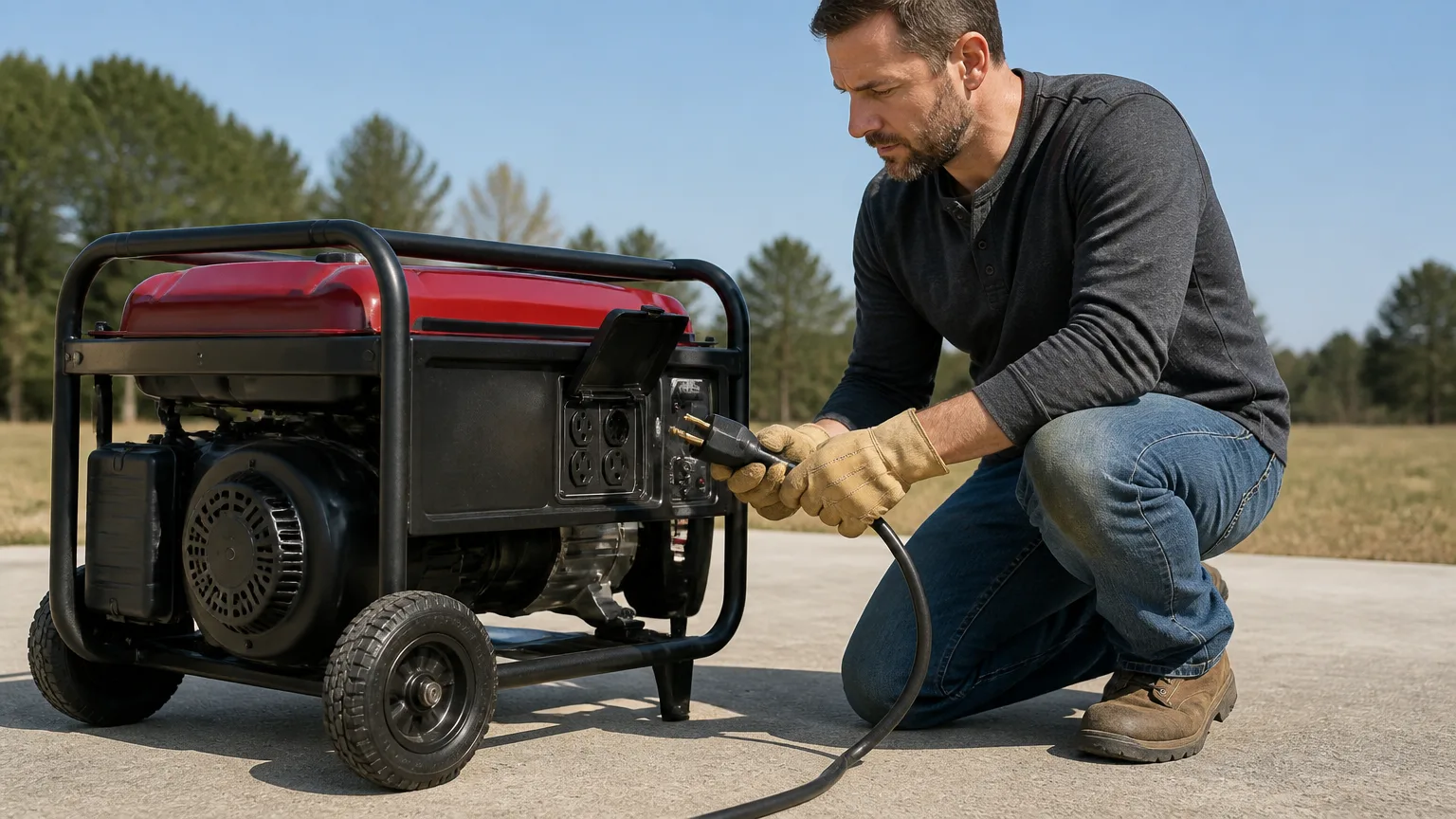
- Move the generator to a dry outdoor location and disconnect every plug. Include extension cords, splitters, power strips, adapters, RV cords, and appliances. Do not leave a cord connected simply because its tool is switched off.
- Check the generator’s main AC breaker or overload control. Reset it only as described in the owner’s manual. On some models, the GFCI will not behave normally unless the engine is running and the AC breaker is on. ([cdn.powerequipment.honda.com](https://cdn.powerequipment.honda.com/pe/pdf/manuals/00X31Z266120.pdf?utm_source=openai))
- Try the GFCI reset with nothing connected. Press it firmly once. Do not hold it in, tape it, jam it, or repeatedly force it.
- If it resets, reconnect one known-good load at a time. Begin with a simple, dry appliance or tool in good condition. Let it run briefly, then add only one item or cord at a time.
- If it trips after one item is connected, stop using that item and its cord. Test with a different known-good cord and appliance only after the generator has been returned to a safe, dry condition.
- If it will not reset with every load removed, stop troubleshooting at the outlet. Check the exact manual for its specified test/reset sequence and contact an authorized service professional if the procedure does not restore normal operation.
Check connected loads before blaming the generator
The fastest useful question is simple: does the reset button stay in with the generator unloaded? If yes, the portable generator ground fault outlet problem is likely downstream of the generator. The likely suspects are the extension cord, an adapter, a power strip, or the appliance.
Unplug more than the appliance
Remove every connected accessory from the receptacle. A cord reel, multi-outlet tap, transfer equipment connection, RV inlet cord, or power strip can be the item creating the fault. Do not connect a portable generator directly to a home’s wiring unless a properly installed transfer switch and the applicable equipment are in place. ([obis.osha.gov](https://obis.osha.gov/Publications/3277-10N-05-english-06-27-2007.html?utm_source=openai))
Add equipment back one piece at a time
Once the GFCI resets with no load, reconnect the shortest, driest, visibly undamaged cord first. Then attach one appliance. If the generator GFCI outlet tripped only when a specific cord or appliance was added, leave that item out of service until it can be inspected or repaired by a qualified person.
This approach also prevents confusion between GFCI action and capacity limits. If the engine labors badly or a breaker opens as loads are added, reduce the load and review the generator’s rated output and starting-watt demands. For a separate load-focused checklist, see Portable Generator Breaker Keeps Tripping: Load, Cord, and Appliance Fault Checks.
Generator receptacle moisture check
Rain, wet grass, condensation, snow melt, pressure washing, and damp storage can all put moisture where it does not belong. OSHA notes that wet cord connectors can allow current to leak, and that leakage may occur beyond the connector face at other wet portions of equipment. ([osha.gov](https://www.osha.gov/etools/construction/electrical-incidents/flexible-cords?utm_source=openai))
- Look for water droplets, mud, corrosion, discoloration, or debris around the receptacle face and weather cover.
- Inspect plug blades and the cord-end connector for wetness, bent parts, cracked housings, or loose strain relief.
- Check the entire cord length, especially areas that lay in wet grass, pass through doors, or have been pinched or run over.
- Allow equipment to dry naturally in a protected, well-ventilated location before use. Do not spray cleaners, lubricants, compressed air, or flammable products into a receptacle.
If the generator, cord, or connected tool was soaked, submerged, or has water inside its electrical components, do not energize it just to see whether the reset button works. OSHA advises having electrical equipment that has gotten wet inspected before it is energized. ([obis.osha.gov](https://obis.osha.gov/Publications/electrical_safety.html?utm_source=openai))
Cord and plug faults that can trip GFCI protection
A cord can look acceptable at a glance while having damaged insulation or an internal conductor problem. Pay particular attention to the plug ends: these areas flex often, get stepped on, and can trap water. Use a factory-assembled, outdoor-suitable, grounded three-wire extension cord of appropriate length and wire size for the intended load. OSHA advises removing damaged or modified cords from service rather than continuing to use them. ([osha.gov](https://www.osha.gov/sites/default/files/publications/OSHA4495.pdf?utm_source=openai))
Take a cord out of service when you find:
- Cracked, crushed, cut, melted, or swollen jacket material.
- Exposed copper, taped repairs, loose plug blades, or a broken ground pin.
- A plug or connector that is wet internally, corroded, discolored, or unusually warm.
- Damage from a door edge, vehicle tire, staple, sharp edge, or repeated kinking.
- A reset problem that returns only when that cord is installed.
Do not rely on a basic outlet tester to settle every generator grounding or neutral question. Generator output configurations differ, and OSHA notes that common receptacle testers can give misleading results on some two-wire portable-generator systems. If your setup includes a transfer switch, RV connection, interlock, or any neutral/grounding question, use the generator and transfer-equipment manuals and consult a qualified electrician or authorized generator service provider. ([osha.gov](https://www.osha.gov/laws-regs/standardinterpretations/1993-09-03-1?utm_source=openai))
When the generator GFCI reset button will not stay in
If the generator GFCI reset button will not stay in even with all loads removed, first confirm the basic operating sequence in the exact owner’s manual. Depending on the design, that can include starting the engine, placing the AC breaker in the on position, or observing a status indicator. Do not assume a reset sequence from another brand or model applies to yours. ([cdn.powerequipment.honda.com](https://cdn.powerequipment.honda.com/pe/pdf/manuals/00X31Z266120.pdf?utm_source=openai))
If the button still will not latch after the receptacle area is dry and every load is removed, possibilities include an internal receptacle fault, damaged wiring, a control-board issue, or a fault elsewhere in the generator output circuit. Those are not safe do-it-yourself repairs for most owners. Generac’s troubleshooting guidance similarly lists defective cord sets, connected devices, generator faults, and an open GFCI as separate causes of lost AC output; its direction for an open GFCI is to correct the ground fault and reset the receptacle. ([generac.com](https://www.generac.com/globalassets/products/residential/portable-generators/owners-manual/gp15500efi-gp18000efi-owners-manual.pdf?utm_source=openai))
What not to do
- Do not bypass, tape down, replace with a non-GFCI device, or otherwise defeat the protective outlet.
- Do not keep pressing reset while a wet, damaged, or suspect cord remains connected.
- Do not use adapters that defeat grounding or alter plug configurations.
- Do not open the control panel or perform energized electrical measurements unless you are qualified and following the exact service information.
- Do not operate the generator in a garage, shed, basement, or other enclosed or partly enclosed space.
When to stop and arrange service
Arrange authorized service if the GFCI fails its manual-specified test, the reset will not hold with the generator unloaded and dry, the receptacle is cracked or heat-damaged, an indicator shows an unexplained fault, or the generator has no AC output after the correct reset sequence. Stop immediately if you smell burning insulation, see arcing, find melted plastic, or notice a shock or tingling sensation.
For broader no-power symptoms after you have isolated cords and loads, see Portable Generator Has No Power at the Outlets: Safe Diagnostic Steps. The key point is to preserve the protection: when a portable generator GFCI outlet will not reset, remove the possible fault first rather than trying to overpower the safety device.