Portable Generator Electric Start Will Not Work: Battery, Fuse, and Starter Checks
When a portable generator electric start will not work, the failure usually falls into one of three groups: the starter does nothing, it clicks but cannot turn the engine, or it cranks normally but the engine will not fire. Those symptoms point to different checks, so avoid replacing parts based on a guess.
Start with the simple items that are safe to inspect: the battery connection, battery condition, control settings, and any model-specific starter fuse. If the electrical side appears sound but the engine still will not run, shift to the normal no-start basics such as fuel, oil level, choke position, and ignition-related maintenance.
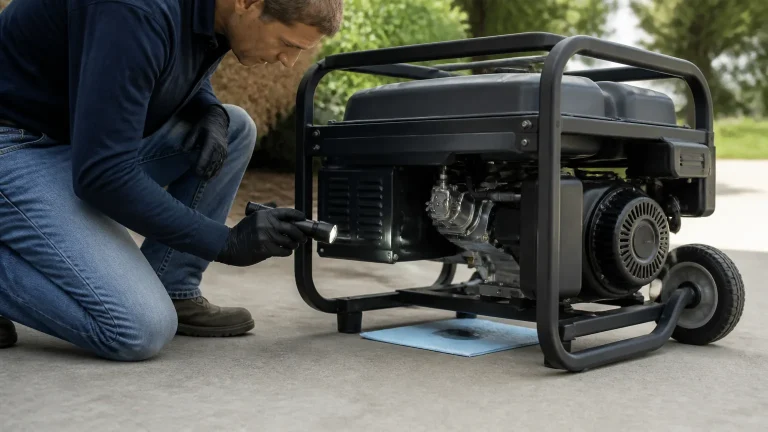
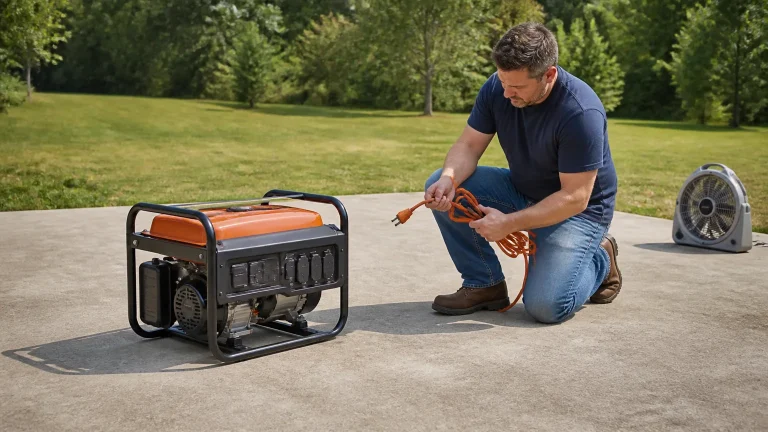
Safety first: Troubleshoot a portable generator outdoors, well away from doors, windows, and vents. Remove plugged-in loads before attempting to start it, keep fuel away from ignition sources, and let a hot engine cool before touching battery cables or servicing nearby components. Never run a generator in a garage, shed, or home.
Portable generator electric start will not work: identify the symptom first
Listen and watch closely when you turn the key, press the start button, or move the switch to START. The sound is useful evidence.
- No sound, no crank: Think battery connection, discharged battery, control switch, fuse, or an interlock/control issue.
- One click or repeated clicking: A weak battery, dirty or loose cable connection, poor ground connection, or a starter circuit problem is more likely.
- Engine turns over but does not start: The electric starter is doing its job. Move on to fuel, oil, choke, spark, and air-flow checks rather than concentrating on the battery.
- Starter turns slowly: Treat this as a battery or cable problem until proven otherwise. A mechanical engine problem can also create heavy resistance, but that needs more careful diagnosis.
Do not hold the start control continuously in an attempt to force the issue. Use the starting interval and rest period specified in the exact owner’s manual. Extended cranking can overheat the starter circuit and drain an already marginal battery.
A safe generator electric start troubleshooting order
- Move the generator to a safe outdoor work area. Set it on a stable surface, disconnect appliances and extension cords, and confirm that it is not connected to a building through an unsafe or improper arrangement.
- Confirm the basic starting setup. Check that the engine switch is in its required ON/RUN position, the fuel valve is open if equipped, the fuel selector is set correctly on a multi-fuel model, and the choke is positioned as the manual calls for. Check the engine oil level according to the manual as well; low-oil protection can prevent starting on many portable generators.
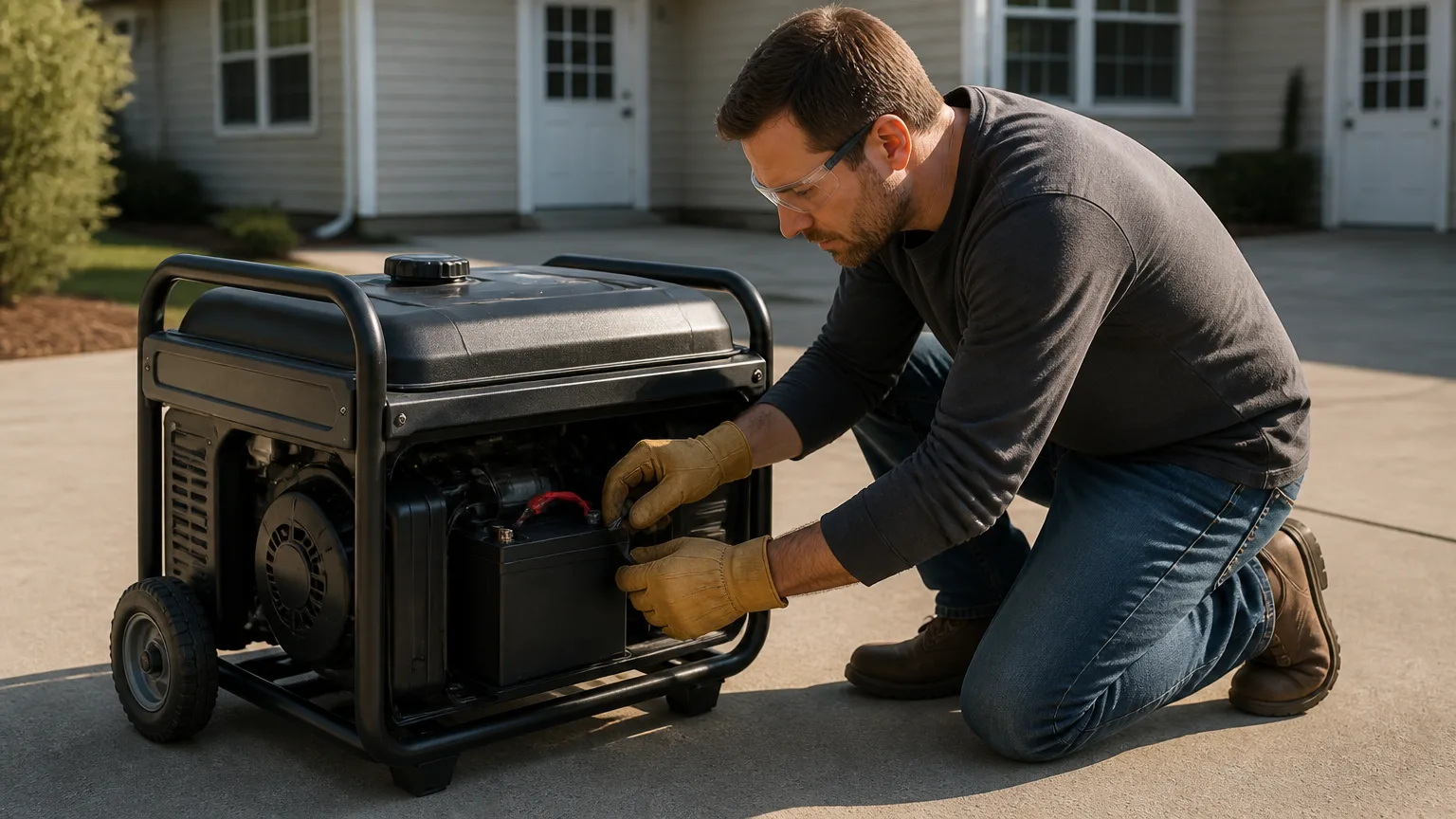
- Inspect the battery and its cables. Look for loose terminal hardware, corrosion, damaged insulation, or a cable that has been pulled loose. With the engine off and cool, clean and reconnect terminals only as the owner’s manual permits.
- Charge the battery the approved way. If the generator has a designated battery-charging input, use the specified charger and procedure. Do not assume every portable generator charges its starting battery in the same way while running.
- Find the starter fuse through the manual, not guesswork. If your model has a serviceable starter or control fuse, identify its location and rating from the wiring diagram, parts list, or troubleshooting section for that exact model.
- Re-test and interpret the result. A restored crank points back toward the battery, cable connection, or fuse. Clicking or no cranking after these checks can mean the starter relay, solenoid, switch, wiring, or starter motor needs professional diagnosis.
- If it cranks, troubleshoot the engine separately. Fresh fuel, correct fuel supply, oil level, choke position, air filter condition, and spark plug condition are the next practical areas to review.
Check the portable generator battery before blaming the starter
A portable generator battery dead condition is common after long storage, especially when the battery was not maintained. A battery can also have enough energy to light an indicator but still lack the current needed to operate the starter.
What to inspect visually
- Battery terminals fully seated on the correct posts.
- Terminal fasteners that are snug, but not overtightened.
- White, blue-green, or crusty corrosion around the terminals.
- Frayed cables, cracked insulation, or a cable that can move at its connection.
- Signs of battery case damage, swelling, leakage, or unusual heat.
If the battery is visibly damaged, leaking, or swollen, do not charge it or continue attempting starts. Follow the battery and generator manual for replacement guidance, or have it handled by a qualified service provider.
Charge only with the prescribed method
Many electric-start generators provide a battery charging connection, but the connector, charger type, and charging instructions vary. Use the manufacturer-specified charging arrangement and do not improvise with unknown leads or chargers. Generac’s portable-generator guidance specifically advises verifying that battery cables are secure and corrosion-free and, on models that support it, confirming the battery is fully charged through the intended external charging method.
If the manual says the running generator charges the battery, that does not mean a deeply discharged or failed battery will recover quickly enough to solve today’s no-crank problem. Charge and test or replace the battery as the manual directs.
Generator starter clicks but will not start: what the noise can mean
When the generator starter clicks but will not start, the click often means that some portion of the control circuit is responding. It does not prove the battery can deliver sufficient cranking power or that the starter motor is healthy.
Repeated rapid clicks
Rapid clicking is often consistent with a low battery or high resistance at a battery connection. Recheck both ends of both battery cables, including the negative/ground connection where it attaches to the generator or engine. Corrosion and looseness can reduce current flow even when the cable looks intact.
One solid click, no engine movement
A single firm click may point to a weak battery, a poor cable connection, a starter relay or solenoid issue, a starter motor fault, or an engine that cannot rotate freely. Do not bridge terminals with a screwdriver or bypass the relay or any safety system. That can create sparks, damage wiring, or defeat protective controls.
Slow or strained cranking
Start by charging the battery and inspecting the cable connections. If the battery is known good and connections are clean and secure but cranking remains slow, stop repeated attempts. The starter circuit or engine may need an authorized service professional. This is especially true if there is a burning smell, hot cables, smoke, or a fuse that blows again.
Generator starter fuse location: use the exact manual
There is no universal generator starter fuse location. Depending on the portable generator, a fuse may be near the control panel, battery area, wiring harness, or inside a protected holder. Other models may use a breaker, relay, or a different protection arrangement instead. Looking for a fuse by copying another generator’s layout can waste time or lead to damage.
Use your model and serial number to obtain the correct owner’s manual and parts information. Look under headings such as “electrical system,” “control panel,” “wiring diagram,” “fuse,” or “troubleshooting.” Before removing anything, turn the engine off, remove loads, and follow the manual’s battery-disconnection procedure if it requires one.
- Replace a fuse only with the exact type and rating specified for the model.
- Never install a larger fuse to stop it from blowing.
- Never substitute wire, foil, or another improvised conductor for a fuse.
- If a replacement fuse blows again, stop. A short circuit or component fault needs diagnosis rather than repeated fuse replacement.
A recurring fuse failure is a good reason to contact an authorized service professional. It can involve damaged wiring, a failed starter component, or another electrical fault that is not safely resolved by trial and error.
When the engine cranks but still will not fire
If electric start turns the engine at normal speed, your problem is no longer primarily an electric-start failure. Work through the starting procedure in the owner’s manual before removing parts.
- Confirm fresh, correct fuel and adequate fuel supply.
- Verify the fuel valve and any fuel selector are set for the fuel being used.
- Check the oil level using the manual’s method.
- Set the choke as directed for a cold or warm engine.
- Make sure the engine switch is in the required RUN/ON position.
- Inspect the air filter and spark plug only after the engine is off and cool, following the manual.
Fuel that has been sitting too long can contribute to hard starting or a no-start condition. Do not spray flammable starting fluids or cleaners around a running or hot engine. If fuel-system cleaning or carburetor service is needed, use the owner’s manual or an authorized technician rather than an improvised procedure.
If the engine starts but later quits, the issue may be separate from the electric-start system. See Why Your Portable Generator Keeps Shutting Off: 8 Causes and Safe Fixes for a focused diagnostic path.
When to stop troubleshooting and schedule service
Home checks should end when the problem moves beyond obvious battery connections, approved charging, control settings, and a manual-identified fuse. Arrange service if you find any of the following:
- A fuse blows more than once.
- The battery or cables become hot, smoke, leak, or smell burned.
- The starter clicks after the battery and connections have been verified.
- The starter spins but does not engage the engine.
- The engine will not rotate or seems mechanically locked.
- Wiring is melted, chafed, chewed, or otherwise damaged.
- The generator cranks normally but still will not start after the manual’s basic fuel, oil, choke, air-filter, and spark-plug checks.
An authorized service professional can test the starter circuit, relay or solenoid, charging system, and engine condition without bypassing safeguards. That is the sensible next step when a portable generator electric start will not work after the basic checks.
Keep the electric start ready for the next outage
Run the generator only according to its maintenance and storage instructions, and keep the starting battery maintained as the manufacturer specifies. Before storm season, inspect battery connections, verify the correct charger is available, review the starting sequence, and locate the exact owner’s manual. A short readiness check is easier and safer than diagnosing a no-crank generator during an outage.