Portable Generator Power Cord Gets Hot: Load, Wire Gauge, and Replacement Checks
A portable generator power cord gets hot when it is carrying more current than it can safely handle, has excessive resistance from its length or wire size, or has a worn connection at a plug or receptacle. Treat noticeable warmth as a warning—not a normal operating condition to ignore.
Safety callout: Shut the generator down, unplug the cord, and let everything cool before inspecting it. Do not keep using a cord, plug, or generator receptacle that is hot, discolored, loose, smoking, or smells burnt. Never backfeed a home through an improvised or male-to-male cord.
Heat can develop along the full cord, but it is especially common at the generator end, the appliance end, and any connection point. The practical goal is to find out whether the problem is too much load, an underrated or excessively long cord, damage inside the cord, or a failing plug or outlet.
If the generator’s breaker also trips, start with this related guide on portable generator breaker, cord, and appliance fault checks. A breaker that has not tripped does not prove that a warm cord or connector is safe to keep using.
Why a portable generator power cord gets hot
Electricity moving through a cord creates some resistance. Under suitable conditions that resistance is low enough that the cord remains cool in ordinary use. But the heat rises when the cord is too small for the current, unnecessarily long, damaged, tightly coiled, or connected through loose or deteriorated contacts.
The U.S. Consumer Product Safety Commission notes that overheating can occur at the plug, socket, or throughout the cord. A hot plug or socket can point to deteriorated wire connections, while heat anywhere on the cord can be a sign of overload or damage. OSHA similarly advises using intact, grounded extension cords that are appropriately rated for the intended wattage or amperage, and replacing underrated cords with heavier-gauge options. CPSC extension-cord safety guidance and OSHA portable-generator guidance both support taking cord heat seriously.
Too much connected load
Load is the first item to check. A cord must be rated for the current drawn by the appliance or appliances connected to it, and the generator circuit must also be able to supply that load. A space heater, large power tool, air compressor, sump pump, refrigerator, or window air conditioner can draw substantial running current. Motors may also need a higher starting surge for a short time.
For a basic 120-volt estimate, divide an appliance’s running watts by 120 to estimate amps. Add the running load of everything connected to that cord or circuit. This is only a planning check: use the ratings on the appliance, cord, generator receptacle, and exact owner’s manual rather than assuming a single calculation covers every starting condition.
Do not try to solve an overloaded-cord problem by resetting breakers repeatedly or by moving the same load to a power strip. Reduce the connected load, use a properly rated cord, or use a generator and circuit arrangement designed for the equipment.
Wire gauge is too small for the job
With extension cords, a lower American Wire Gauge number means a larger conductor. In practical terms, a 12 AWG cord has larger conductors than 14 AWG, and 14 AWG has larger conductors than 16 AWG. Larger conductors generally reduce resistance and voltage drop when cord length and load increase.
That does not mean every generator setup automatically needs the same gauge. The right extension cord wire gauge for generator use depends on the cord’s printed rating, its length, the connected load, the generator outlet type, and the appliance manufacturer’s requirements. Read the jacket and tag on the specific cord. If the cord’s amp or watt rating is below the expected load, it is not suitable.
CPSC advises checking the cord’s rating on its tag or packaging and replacing cords that cannot handle the connected load. Its household guidance identifies 16 AWG as a minimum general benchmark, while recognizing that 14 or 12 AWG is used for heavier loads. For generator use, follow the generator and appliance manuals where they specify cord ratings, especially for 240-volt equipment, RV-style connections, transfer equipment, or high-current receptacles.
Excessive length and voltage drop
A longer cord has more resistance than a shorter cord of the same gauge. That can cause voltage drop at the appliance and more heating in the cord, particularly with high loads. Use the shortest practical factory-assembled cord that reaches safely without tension, sharp bends, pinch points, or trip hazards.
A long, light-duty cord may make a motor run poorly, struggle to start, or draw more current under stress. If the generator runs rough only when appliances are connected, it is also worth reviewing fuel delivery, altitude, and load checks for a generator that runs rough under load. Do not assume engine behavior proves the cord is acceptable; inspect and size the cord separately.
Heat concentrated at the plug or connector
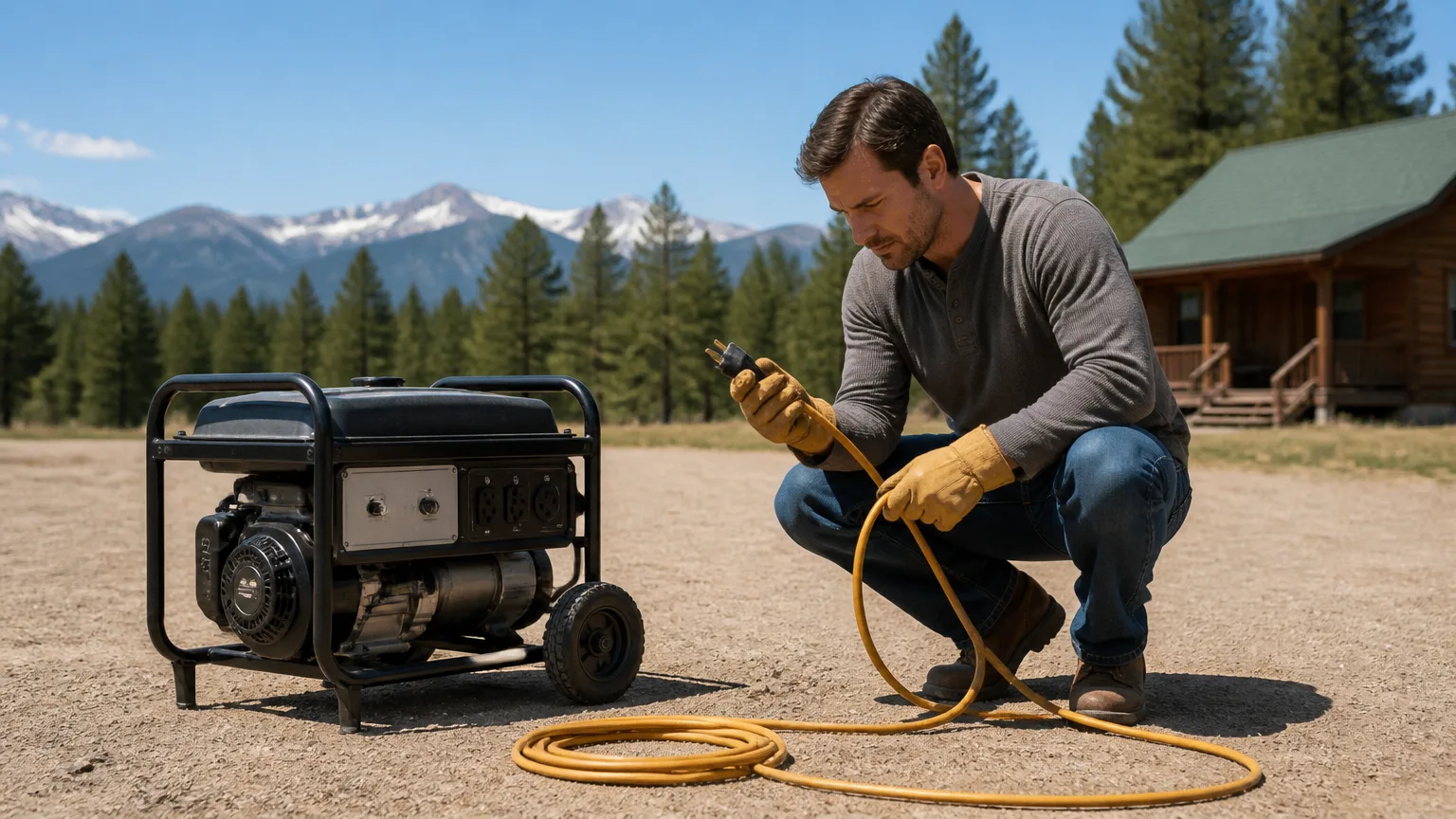
A generator cord hot at plug is often a connection problem rather than a full-length wire-gauge problem. Loose blades, worn contacts inside a female connector, a plug that does not seat firmly, corrosion, cracked housings, and internal strand damage can all create resistance at one small point. That resistance becomes heat.
Pay close attention if one end is much hotter than the rest of the cord. Check for browning, melting, hardened insulation, a burnt odor, loose-fitting connectors, cracked strain relief, bent blades, or a receptacle that no longer grips the plug firmly. A damaged generator outlet can also be the source of heat. Do not attempt an improvised repair or keep using the setup with a different cord as a permanent workaround.
Diagnostic order for generator extension cord overheating
- Stop using the cord. Turn off or disconnect the load, shut down the generator according to its owner’s manual, unplug the cord by the plug body, and allow it to cool. Keep the cord dry.
- Identify where the heat occurred. Note whether the warmth was along the cord, at the generator plug, at the appliance plug, or at the generator receptacle. Heat at a single connector is useful evidence of a poor connection.
- Inspect the entire cord with it disconnected. Look for cuts, flattened sections, abrasion, loose plug blades, cracked insulation, missing ground pins, exposed conductor, melted areas, and previous tape repairs. OSHA recommends removing damaged or modified flexible cords from service.
- Read the cord markings. Confirm it is a grounded three-wire cord where the equipment requires grounding, is marked for outdoor use when used outdoors, and has a clearly printed voltage and amp or watt rating. Check its AWG marking and length.
- Compare the load to every limiting rating. Use the appliance nameplates and manuals, the cord rating, the generator receptacle rating, and the generator’s available output. The safe setup is limited by the lowest applicable rating.
- Remove unnecessary loads and connections. Do not daisy-chain extension cords, run a cord through a power strip, or use splitters as a way to serve several demanding appliances. Use a single properly rated cord where practical.
- Check cord routing. Fully uncoil the cord before use. Do not trap it under rugs, doors, furniture, vehicle tires, or equipment, and keep it away from standing water, sharp edges, oil, and hot engine or exhaust parts.
- Evaluate the generator receptacle. If a known-good, properly rated cord becomes hot at the generator end, or the outlet itself is loose, discolored, or hot, leave the generator out of electrical service and consult an authorized service professional.
When replacement is the right answer
Replacement is the safe choice when the cord has been hot enough to discolor, soften, deform, smell burnt, or lose plug retention. Replace it if there is damaged insulation, exposed wire, altered plug blades, a missing grounding pin, loose connector parts, or a repair made with tape. A cord may look acceptable from the outside while having damaged strands or loose terminations inside, so prior overheating alone is a valid reason to retire it.
Choose a replacement that is factory assembled, grounded when required, suitable for outdoor use, and rated above the expected load for its full length. Select a cord configuration that matches the generator receptacle and appliance plug without adapters that defeat grounding or alter the intended connection. For a model-specific receptacle or high-amperage cord set, consult the generator owner’s manual or an authorized service professional before buying a replacement.
Do not replace only the cord if the generator outlet, appliance inlet, or plug connection shows heat damage. A new cord connected to a loose or burned receptacle can overheat again.
Generator cord fire safety habits that prevent repeat problems
- Use the generator outdoors, well away from doors, windows, vents, and enclosed spaces.
- Use cords rated for outdoor duty and the actual load—not just cords that physically fit the outlets.
- Keep cords as short as practical, fully uncoiled, and protected from crushing, abrasion, moisture, and heat.
- Check plugs and cord jackets before each use, especially after storm use, jobsite use, or storage in a damp garage.
- Plug and unplug by gripping the plug body, not by pulling the cord itself.
- Do not use male-to-male cords or connect a portable generator directly to building wiring without a properly installed transfer system.
- Do not use a cord that becomes warm again after the load has been reduced and all visible damage has been ruled out.
For generator cord fire safety, the decision point is straightforward: a cord that gets hot is telling you something about load, wire size, length, damage, or a poor connection. Shut it down, identify the cause, and replace questionable components rather than accepting repeated warmth as normal. If the diagnosis involves generator receptacle wiring, 240-volt connections, a transfer switch, or recurring heat with properly matched equipment, have an authorized service professional inspect the system.