Portable Generator Exhaust Is Smoking: Oil Level, Airflow, and Fuel Checks
Safety first: Run a portable generator outdoors only, well away from doors, windows, and vents. Shut it down, let hot parts cool, and disconnect electrical loads before inspecting it. Exhaust contains carbon monoxide, and fuel or oil can ignite on hot engine and muffler parts.
Portable generator exhaust smoking can be unsettling, but the smoke color, when it began, and whether it continues after a brief warmup all matter. A short puff after maintenance or a generator being laid on its side may have a different cause than steady smoke accompanied by rough running, oil loss, or a strong fuel odor.
Start with simple external checks rather than disassembling the engine or changing carburetor settings. Oil that is too high, a restricted or over-oiled air filter, old or contaminated fuel, and improper transport position are reasonable items to rule out. If the smoke is heavy, persistent, or paired with unusual noise, stop running the generator and arrange service.
Portable generator exhaust smoking: start with the smoke pattern
Smoke color is a clue, not a complete diagnosis. Lighting, cold weather, humidity, and the angle of the exhaust can make the plume look different. Focus on what you can observe safely from a distance.
- White or pale smoke: May point to oil reaching areas where it should not be, especially after overfilling the crankcase, over-oiling a foam filter, or transporting the unit improperly. A brief startup event is less concerning than smoke that remains after the engine is warm.
- Black smoke: Often suggests an overly rich fuel-and-air condition. A dirty air filter, choke left on too long, stale fuel, or a fuel-system fault can contribute.
- Blue-gray smoke: Often indicates the engine is consuming oil. Continued blue-gray exhaust deserves prompt attention, particularly if the oil level falls between checks.
- No visible smoke but a hot or sharp odor: Shut the unit down if you suspect spilled oil or fuel is contacting hot surfaces. Do not keep operating it just to “burn it off.”
Also note whether the portable generator engine smoke began immediately after an oil change, air-filter service, refueling, transport, long storage, or an abrupt tip-over. That timeline can prevent unnecessary repairs.
Use this diagnostic order before restarting
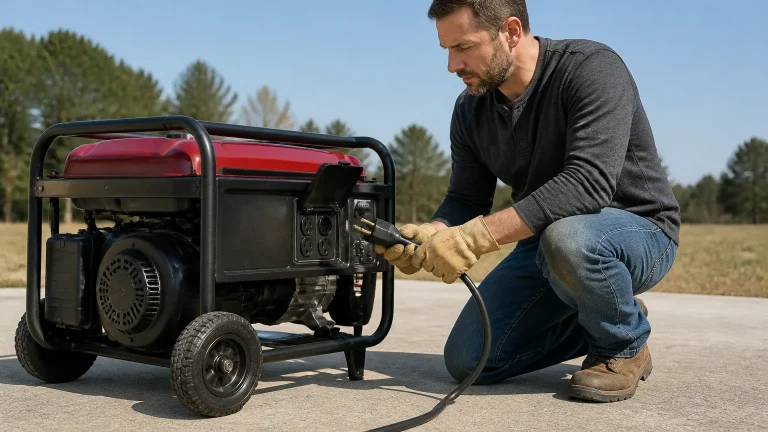
- Move it to a safe inspection area. Place the generator outdoors on a firm, level surface. Turn the engine switch off, close the fuel valve if equipped, remove connected loads, and allow the engine and muffler to cool.
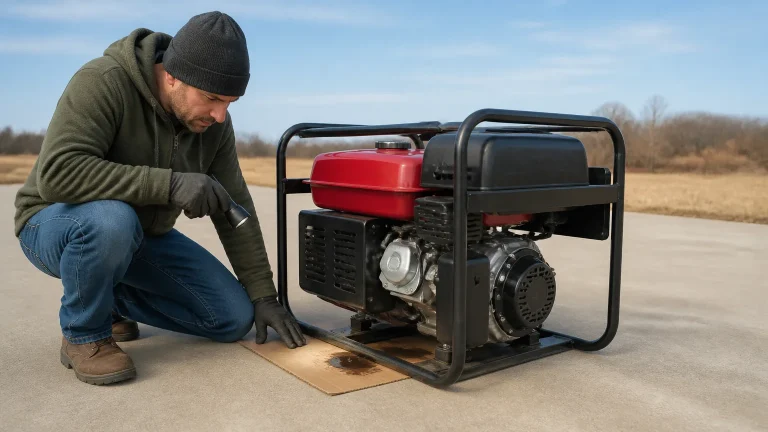
- Look for an external spill or leak. Check the crankcase fill area, air-cleaner housing, fuel cap, carburetor area, and ground underneath. Do not start a generator with active fuel leakage or oil pooled near hot parts.
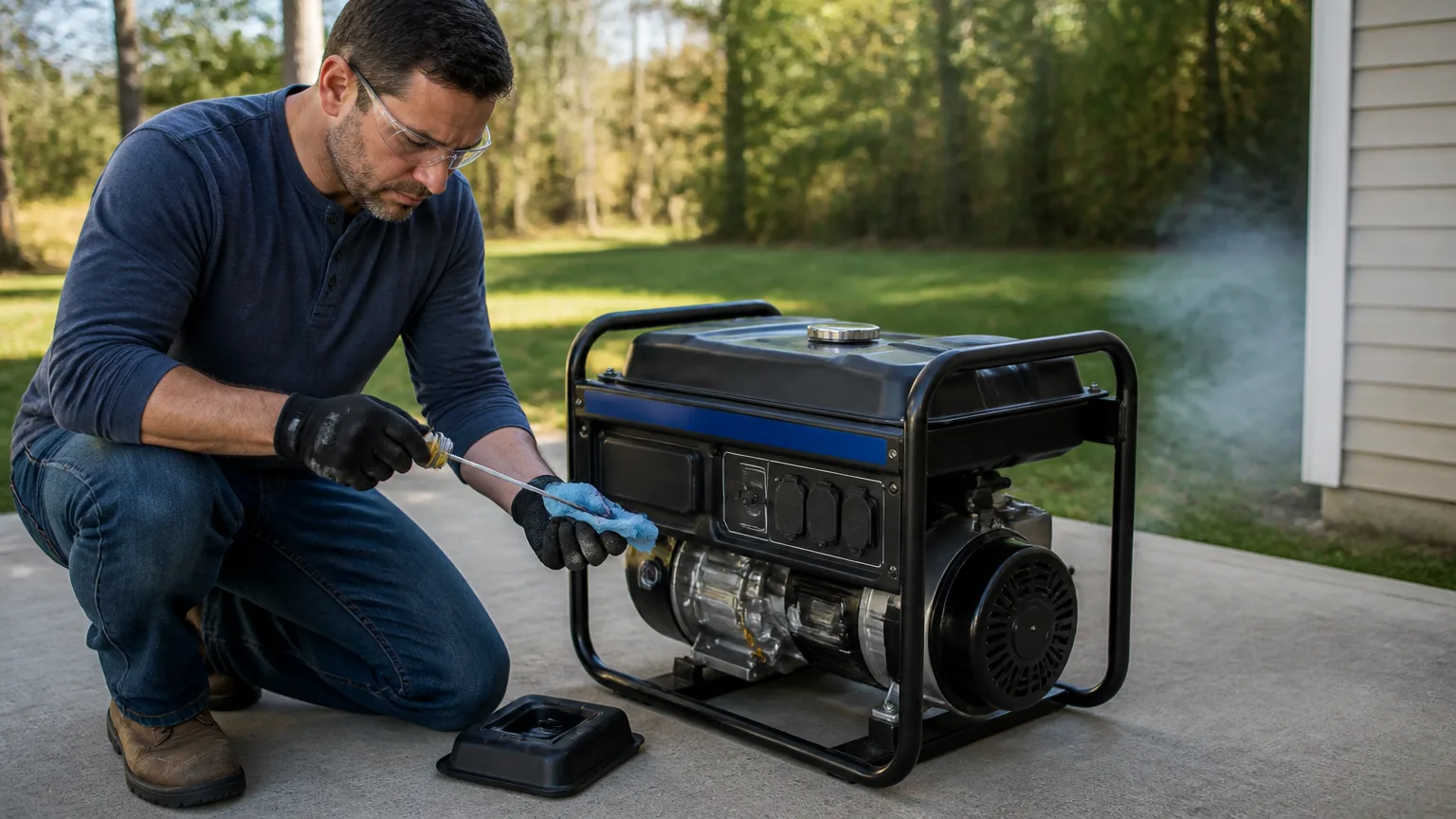
- Check the oil level exactly as the owner’s manual specifies. Generator dipstick procedures differ: some call for checking with the dipstick resting in the filler neck, while others use a threaded-in position. Follow the manual for your exact model and keep the generator level while checking.
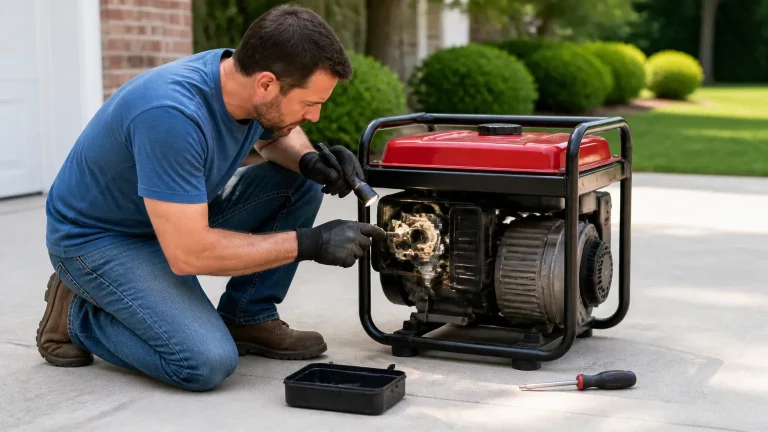
- Inspect the air filter and its housing. Look for a packed paper element, damaged foam, standing oil, loose debris, or an air-cleaner cover that is not seated correctly.
- Verify fuel condition and choke position. Confirm that the fuel is appropriate for the generator, not stale or visibly contaminated, and that the choke is moved to its normal run position after starting.
- Consider recent transport. If the generator was tipped, carried on its side, or moved while hot, do not assume it is ready to restart. Inspect it upright after it has cooled and use the manual’s transport instructions.
- Restart only if the basic checks are normal. Run it outdoors with no electrical load initially, observe from a safe distance, and stop it if heavy smoke continues or the engine runs abnormally.
Check for too much, too little, or contaminated oil
An overfilled crankcase is one of the first things to investigate when a generator is blowing white smoke or blue-gray smoke. Too much oil can be carried into the breather and intake path, where it may be burned. Overfilling can happen when oil is checked on an uneven surface, when the wrong dipstick method is used, or when oil is added before a previous fill has fully settled.
Do not guess at the correction. If the level is above the manual’s upper limit, drain or remove oil only using the method specified for the model. Avoid running the generator to reduce an overfill. Wipe up any spill completely before a restart, and keep oil away from the muffler and exhaust shield.
Low oil is not a likely explanation for visible exhaust smoke by itself, but it is still a stop-and-check condition. Running low can damage the engine, and a low reading may indicate a leak or oil consumption. If the level is repeatedly dropping or you see ongoing blue-gray smoke, an authorized service professional should evaluate the engine rather than treating it as a routine oil-level issue.
Fuel in the oil is a separate warning sign
If the oil level is unexpectedly high and the oil smells strongly of gasoline or seems unusually thin, do not run the generator. Fuel can enter the crankcase when the fuel valve is left open during storage or transport on some designs. Honda specifically advises turning the fuel valve off before transport or storage because gasoline can enter the crankcase and dilute the oil. Follow the exact manual’s instructions for correcting suspected fuel dilution and for safe fuel handling.
Restore airflow without creating another problem
A restricted air filter reduces the air reaching the fuel system and can contribute to a rich-running condition. That makes the air filter a sensible early check when a generator is blowing black smoke, has reduced power, or runs rough along with smoky exhaust.
Remove and inspect the filter only with the engine off and cool. Replace a torn, oil-soaked, or excessively dirty element. Never run the generator without the air filter or with the air-cleaner cover left loose. The filter protects the engine as well as supporting correct airflow.
Foam elements need special care. Some generator manuals specify oiling a foam filter, but excess oil left in that foam can cause smoke during initial startup. Use only the cleaning and oiling method stated in your owner’s manual. Do not use gasoline or another flammable liquid to clean a filter, and do not spray cleaners into the intake of a running or hot engine.
If the filter is clean and correctly installed but black smoke continues, do not compensate by removing the filter or altering mixture adjustments. The cause may be related to the choke, fuel system, ignition, or an internal engine issue that needs model-specific service.
Fuel checks for black smoke, rough running, and storage problems
Fuel issues do not always produce visible smoke, but they can make a generator run rich, surge, misfire, or produce dark exhaust. Start with fuel that meets the requirements in your exact owner’s manual. Do not use stale gasoline, fuel with visible water or debris, or an oil-and-gas mix unless the generator manual explicitly calls for it.
After starting a cold engine, make sure the choke is returned to the run position according to the manual. A choke left engaged can limit intake air and contribute to black smoke and rough operation. If the generator settles down as the choke is opened, that is useful information; if it still smokes heavily with the choke fully off, stop and continue with inspection rather than forcing it to carry a load.
Storage-related fuel problems often overlap with other running complaints. If smoke comes with hunting, surging, or poor performance under appliances, this related guide may help you separate an engine-fuel issue from an electrical-load issue: portable generator runs rough under load.
Why a generator smoking after transport needs a cautious approach
A generator smoking after transport can result from oil shifting into the breather or air-cleaner area, a spill around the filler, or fuel moving where it should not. Honda’s generator guidance says to transport and store units upright, with the fuel valve off where equipped, after allowing the unit to cool.
Set the generator upright on level ground and inspect before starting. Check the oil level, air cleaner, fuel cap, fuel lines, and the area around the carburetor. If you find oil in the air box or a saturated filter, service it according to the manual before operating. If the generator was significantly tipped, dropped, has a damaged fuel line, or will not run normally afterward, seek authorized service.
When to stop troubleshooting and schedule service
Basic oil, airflow, and fuel checks are appropriate for many cases of portable generator exhaust smoking. Stop the process and consult an authorized service professional when you find any of the following:
- Heavy smoke that does not clear after a brief, no-load observation period.
- Blue-gray smoke with a falling oil level.
- Black smoke that continues with the choke fully off and a clean, correctly fitted air filter.
- Fuel-contaminated oil, active fuel leakage, or a gasoline odor from the crankcase.
- Knocking, grinding, repeated stalling, loss of compression, or a major drop in output.
- A generator that was dropped, severely tipped, flooded, or damaged in transport.
Do not continue loading a smoking generator with appliances in hopes that it will clear up. If you also have outlet or overload symptoms, use the generator’s protective devices as intended and review portable generator breaker keeps tripping before assuming the engine smoke and electrical problem share one cause.
A practical restart checklist
- Generator is outdoors, level, dry, and clear of combustibles.
- Engine has cooled and there are no active oil or fuel leaks.
- Oil level is within the manual’s specified range and checked by the correct method.
- Air filter is clean, undamaged, correctly installed, and not over-oiled.
- Fuel is fresh enough, uncontaminated, and suitable for the model.
- Choke is used only for starting and returned to run as directed.
- Generator is initially started with electrical loads disconnected.
The key is to treat exhaust smoke as a reason to inspect, not as a symptom to ignore. A careful check of oil level, airflow, fuel condition, and recent transport can identify straightforward causes of portable generator exhaust smoking. Persistent smoke, oil consumption, leaks, or abnormal engine behavior are the point to stop and use the exact owner’s manual or professional service support.