Pressure Washer Recoil Starter Is Stuck: Engine, Pump Pressure, and Starter Checks
If your pressure washer recoil starter is stuck, do not keep yanking the handle or use a longer handle for extra leverage. A pressure washer pull cord will not pull for several different reasons, and the easiest one to rule out is often trapped water pressure in the pump and hose. A rope that remains solidly locked after pressure is released can point instead to the recoil starter, pump drive, or engine.
Safety callout: Turn the engine switch off before inspecting the unit, keep the spray gun pointed in a safe direction, and never run a pressure washer pump without its required water supply. Stored water pressure, a hot engine, fuel, and moving parts all create hazards. Follow the exact owner’s manual for your model, and use an authorized service professional for internal engine or pump work.
This guide applies to gas-powered pressure washers with a pull-start engine. An electric pressure washer does not use a recoil starter; if it hums but will not run, the motor and pump need a different diagnostic path.
What a stuck recoil starter can mean
A pressure washer recoil starter is stuck when the handle cannot be pulled out at all, stops after a very short movement, or feels unusually hard to pull. The feel of the rope matters:
- Rope will not move at all: The recoil mechanism may be jammed, the engine may be unable to turn, or the pump may be creating a severe load.
- Rope pulls a few inches and stops: Trapped discharge pressure is a common possibility, especially after the washer was shut off with the trigger released.
- Rope comes out but will not retract: Look first at the starter rope, pulley, spring, and housing rather than the pump.
- Rope jerks backward or pulls extremely hard: Stop pulling. Compression, an engine fault, or a model-specific starting issue may be involved.
Do not assume that every pressure washer pull start locked up condition is an engine seizure. Start with the non-invasive pressure check, then move toward mechanical causes only if the rope still will not move.
Pressure washer recoil starter is stuck: use this diagnostic order
- Stop forcing the rope. A hard pull can damage the recoil pawls, rope, handle, spring, or starter housing. It can also cause a sudden kickback that injures your hand or shoulder.
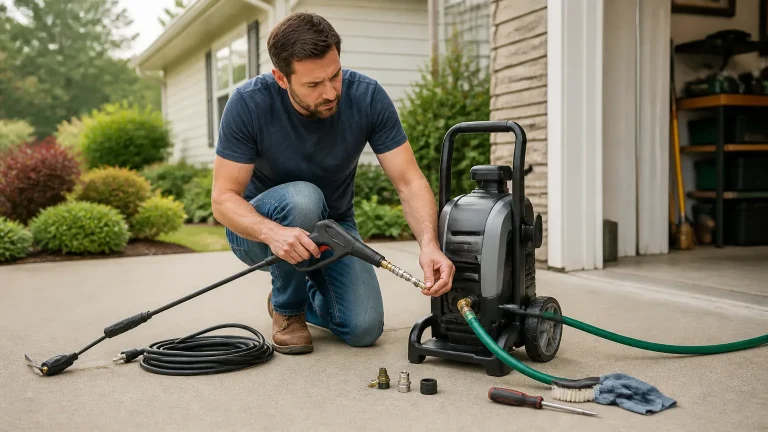
- Set up the washer as the manual requires. Put it on stable, level ground. Confirm that the high-pressure hose and spray gun are properly connected. Connect the water supply and turn it on before any attempt to start the engine.
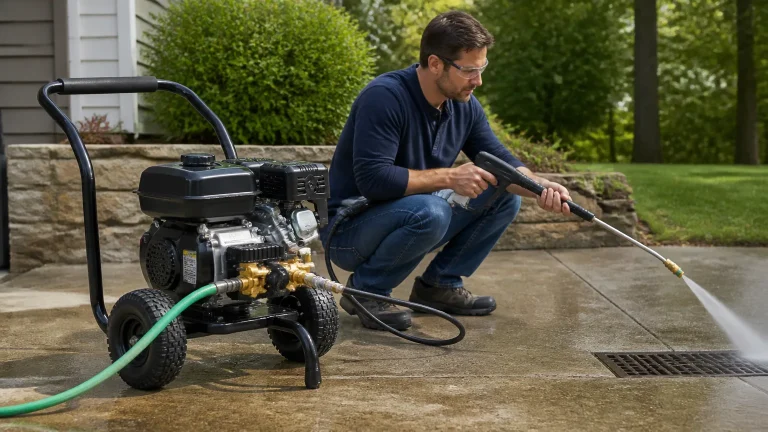
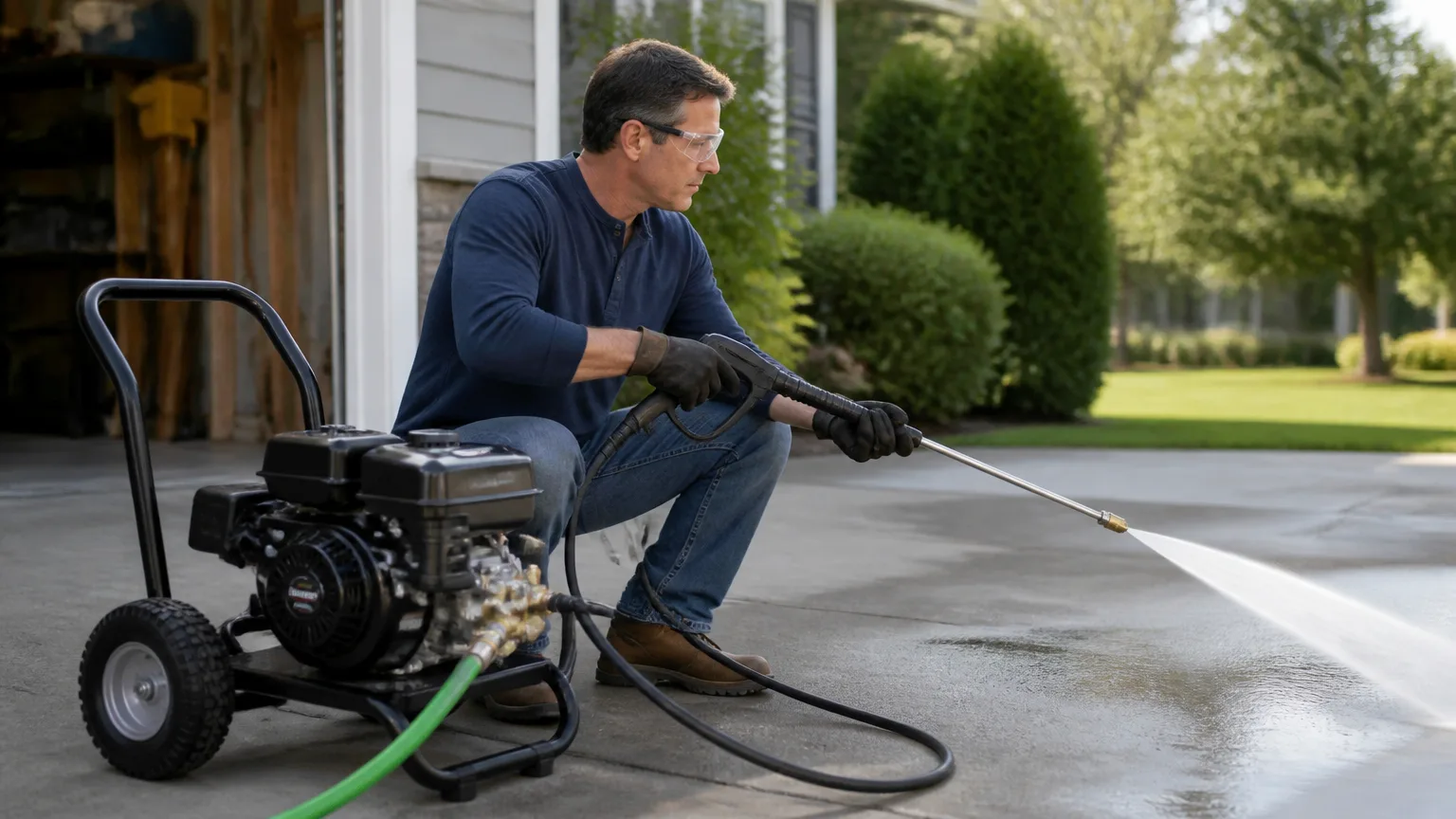
- Relieve trapped spray-gun pressure. With the engine off, aim the wand in a safe direction and hold the trigger until water flow and pressure subside. Generac’s pressure-washer instructions specifically call for relieving spray-gun pressure before recoil starting. Keep hands away from the nozzle and do not point it at people, animals, electrical equipment, or fragile surfaces.
- Try one controlled recoil pull. Hold the unit steady as the owner’s manual directs. Pull slowly until you feel resistance, then use one firm, smooth pull. Do not snap the rope or wrap it around your hand.
- Observe what changed. If the rope now pulls normally, trapped pump pressure was likely the immediate cause. If it is still immovable, stop and inspect the starter and engine-related clues below.
Knowing how to relieve pressure before starting pressure washer equipment can prevent a difficult pull in normal use. Make it part of every start, particularly after the machine has been sitting with the hose connected. If the trigger will not release pressure, do not loosen a pressurized fitting. See our guide to a pressure washer quick-connect fitting that will not release for safer depressurizing and connection checks.
Check whether pump pressure is really the cause
Residual pressure can load the pump enough that the engine feels difficult to rotate. This is most likely when the pressure washer was shut down without first squeezing the trigger, when a hose is still pressurized, or when the gun or unloader is not releasing pressure normally.
Signs that point toward trapped pressure
- The machine was working normally just before shutdown.
- The pressure washer starter rope stuck condition appeared after the unit sat briefly with the hose connected.
- The spray gun produces a short, forceful burst or a noticeable flow when you hold the trigger with the engine off.
- The rope becomes easier to pull immediately after pressure is released.
If pressure repeatedly returns or the engine stalls whenever you pull the trigger after it starts, the issue may be beyond a simple starting habit. A restricted nozzle, trigger-gun problem, or unloader-related fault can affect pump loading. Our article on a pressure washer engine that stalls when the trigger is pulled explains the related water-flow and pump-load checks.
What not to do when relieving pressure
- Do not disconnect the hose, gun, wand, or quick-connect fitting while you believe pressure remains trapped.
- Do not run the engine to “blow out” a suspected obstruction.
- Do not operate the washer without a suitable water supply turned on.
- Do not modify the trigger gun, unloader, thermal-relief valve, or any safety-related component.
If the spray gun cannot be operated safely, a fitting leaks under pressure, or the hose is damaged, leave the unit off and consult the model manual or a qualified pressure-washer technician.
When the starter rope itself is stuck
A pressure washer starter rope stuck in the recoil housing is different from a rope that is hard to pull because the engine is resisting rotation. Look for obvious external clues before removing anything:
- The rope is frayed, flattened, tangled, or pulled sideways through the starter opening.
- The handle sits tight against the housing and will not pull outward.
- The rope pulled out previously but now will not rewind.
- You hear scraping, loose pieces, or a spring-like rattle near the recoil cover.
These symptoms can indicate a worn rope, broken rewind spring, damaged pulley, or starter pawls that are not engaging or returning correctly. The recoil assembly is spring-loaded. Removing its cover can release parts unexpectedly, and replacement details vary by engine family. If your exact owner’s manual does not provide a starter-service procedure, use an authorized service professional rather than prying into the housing.
Before ordering parts, identify the engine model and type code from its label or stamping. The engine model—not just the pressure-washer brand—determines the correct recoil starter and service information.
When the engine or pump may be preventing rotation
If pressure has been relieved and the recoil rope is not tangled, the engine may not be able to rotate freely. That does not automatically mean the engine is ruined. It does mean repeated pulling is no longer a useful test.
Common clues that need closer service evaluation
- Recent freeze exposure: A cracked or internally damaged pump can create problems that may not be obvious from the outside.
- Long storage: Corrosion, stale fuel effects, or internal sticking can develop while the washer is parked.
- Oil concerns: Oil that is overfilled, unusually high on the dipstick, milky, or smells strongly of gasoline deserves attention before another start attempt.
- Water or fuel where it should not be: Internal liquid intrusion can make an engine difficult or unsafe to turn.
- Sudden lockup during use: Stop using the washer and arrange professional diagnosis, particularly if there was unusual noise, smoke, overheating, or a pump leak.
Check the engine oil level only with the machine positioned as the engine manual specifies. Do not continue trying to start an engine with questionable oil condition or a suspected liquid-lock condition. Internal inspection can involve fuel, ignition, compression, and moving parts; it is best handled according to the exact engine manual or by an authorized technician.
A practical decision guide
Use the result of the basic checks to decide what comes next:
- The rope frees up after holding the trigger: Resume normal starting only with water supplied. Relieve gun pressure before future starts.
- The rope pulls but will not retract: Stop and inspect or service the recoil assembly; do not leave loose rope near hot or moving parts.
- The rope cannot move after pressure relief, with no visible rope bind: Treat this as a possible engine, pump, or starter-drive problem. Professional evaluation is sensible.
- The rope kicks back, locks suddenly, or requires extreme force: Stop immediately. Do not attempt to defeat compression or safety systems.
- The unit has freeze damage, a major leak, or abnormal oil: Do not run it until the underlying issue is assessed.
Prevent the next hard pull
After each use, shut the engine down according to its manual, then relieve remaining pressure through the spray gun in a safe direction. Store the machine protected from freezing temperatures, inspect the hose and gun before use, and avoid leaving the system pressurized. Use fresh fuel and follow the engine maker’s storage schedule for your specific model.
Most cases where a pressure washer recoil starter is stuck are resolved by safely releasing stored pump pressure or addressing an obvious recoil-rope fault. But a rope that remains locked after those checks is a reason to stop—not a reason to pull harder. The exact pressure-washer and engine manuals should guide any deeper repair.