Air Compressor Spits Water From the Hose: Drainage, Humidity, and Moisture-Control Checks
If your air compressor spits water from hose, the compressor is usually carrying condensed moisture from the tank into the air line. That is a common compressed-air problem, especially in humid weather or during longer run times. It does not automatically mean the pump has failed. Still, water coming out of an air compressor hose can spoil a paint finish, make blasting media clump, and leave tools wetter than they should be.
Safety note: An air compressor tank holds stored energy, and the pump and discharge parts can be hot. Turn the unit off, disconnect electrical power, allow it to cool, and follow the exact owner’s manual before draining or servicing it. Wear eye protection and keep clear of the drain outlet and pressurized hose connections.
The practical fix starts at the tank drain, then moves downstream to the hose, filter, and tool. Do not try to solve a water problem by defeating a safety valve, altering pressure controls, or taking apart a pressurized tank.
Why an air compressor spits water from hose
Room air contains water vapor. When the compressor draws in that air and compresses it, the air warms. As it later cools in the tank, hose, and fittings, moisture can change into liquid water. The tank is intended to collect much of that condensation at its low point, where the drain valve is located.
Campbell Hausfeld notes that moisture can collect in compressor tanks during high humidity or extended use, then travel through the hose and leave the spray gun as droplets. That is why the symptom can be most obvious while painting or sandblasting rather than while simply filling a tire. ([campbellhausfeld.com](https://www.campbellhausfeld.com/files/manuals/manual09/625301_0609-web.pdf?utm_source=openai))
More water is likely when the surrounding air is humid, the compressor runs for a long period, the tank has not been drained recently, or the air travels directly from the tank to a sensitive tool without a moisture-control device. A short hose connected directly to a spray gun gives hot, wet compressed air little opportunity to cool and shed water before it reaches the work.
Check these items in order
- Stop work if the water affects the result. Do not continue spraying paint, clear coat, or other finish material through visibly wet air. Water can leave defects or spots. For blasting, moisture can make media cake and clog the gun. ([campbellhausfeld.com](https://www.campbellhausfeld.com/files/manuals/manual09/625301_0609-web.pdf?utm_source=openai))
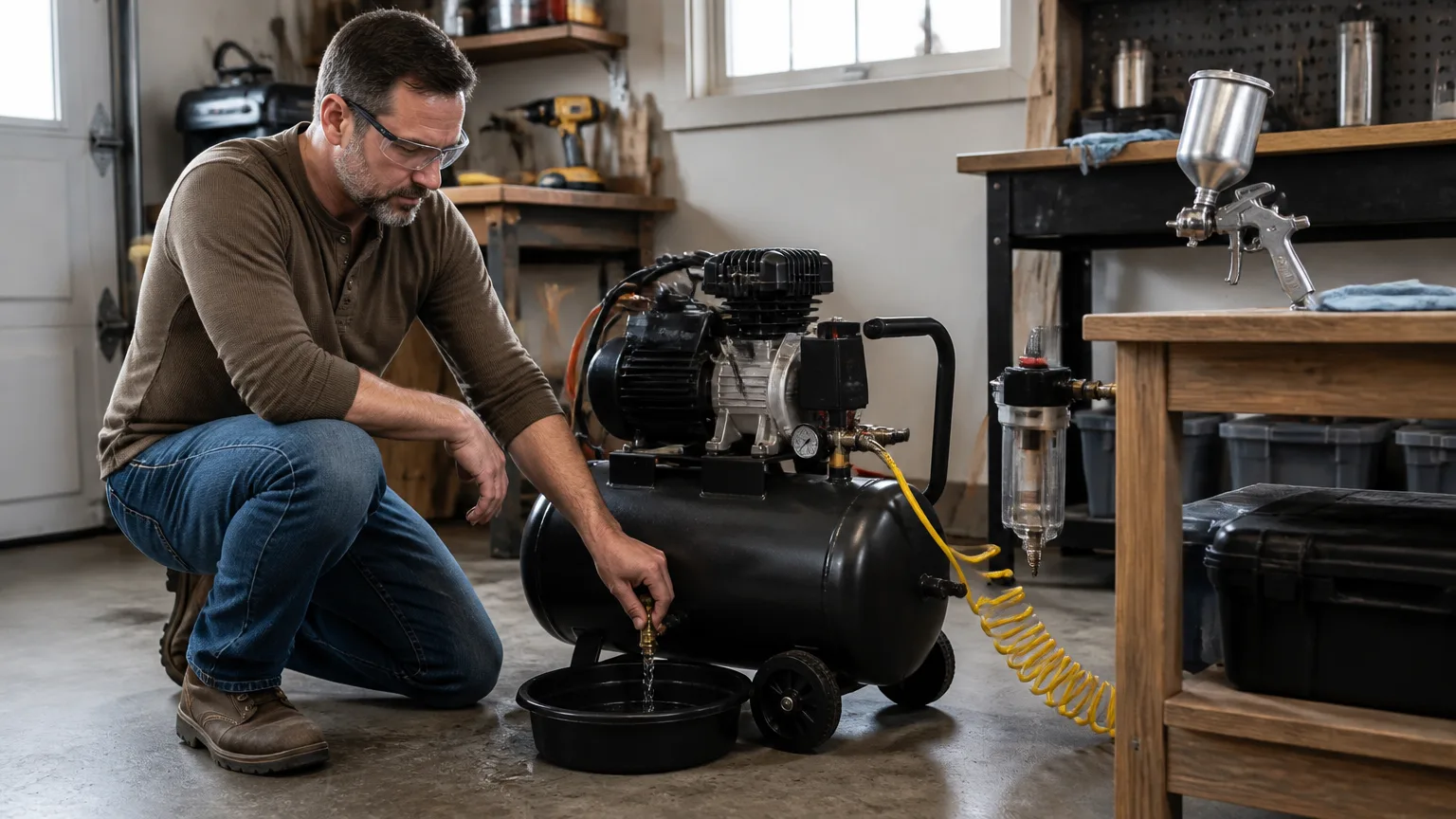
- Drain the tank safely. Use the drain method, pressure limits, and positioning stated in the manual for your exact compressor. Many portable-compressor manuals call for draining daily or after each use because condensate can corrode and weaken a steel air tank. ([dewalt.com](https://www.dewalt.com/GLOBALBOM/QU/D55146/5/Instruction_Manual/EN/N281961_D55146.pdf?utm_source=openai))
- Look at what comes out. A small amount of clear or rusty water after operation is consistent with condensation. Collect it in a suitable container; compressor condensate may include oil or rust and should not simply be treated as clean water. ([dewalt.com](https://www.dewalt.com/GLOBALBOM/QU/D55146/5/Instruction_Manual/EN/N281961_D55146.pdf?utm_source=openai))
- Run clean air briefly after the tank is drained and closed. Reconnect the hose and check whether droplets still appear at the outlet. If the water clears quickly, stored tank moisture was probably the main source.
- Inspect the hose and tool connection. Disconnect only after pressure has been relieved as the owner’s manual directs. Look for standing water in a low loop, a soaked inline filter, damaged couplers, or a tool that was stored in a damp location.
- Review the air-treatment layout. If the symptom returns during extended work, add or maintain moisture control appropriate for the application rather than relying on tank draining alone.
How often to drain an air compressor
For the question, how often to drain an air compressor, start with the interval in its owner’s manual. A sensible baseline for many portable units is daily or after each use, with more attention during humid weather and long operating sessions. DeWalt manuals for several portable compressors specifically say to drain the air tank daily or after each use. ([dewalt.com](https://www.dewalt.com/GLOBALBOM/QU/D55146/5/Instruction_Manual/EN/N281961_D55146.pdf?utm_source=openai))
There is no single amount of water that applies to every shop. A compressor used briefly in dry indoor air may release little moisture. The same unit used for repeated spraying on a muggy day may collect noticeably more. Treat the amount drained as feedback: if water repeatedly reaches the hose, shorten the interval between drains and improve downstream moisture control.
For larger installed systems, automatic drains can be useful, but they supplement rather than erase maintenance responsibilities. OSHA’s air-receiver standard requires a drain at the lowest point for removal of accumulated oil and water and says the receiver should be completely drained often enough to avoid excessive liquid buildup. ([osha.gov](https://www.osha.gov/laws-regs/regulations/standardnumber/1910/1910.169?utm_source=openai))
Do not ignore a drain that produces nothing
A dry tank drain does not always prove the tank is dry. If you know the compressor has operated in damp conditions but nothing comes out, confirm that the unit is positioned as its manual requires and that the drain valve is not clogged. DeWalt’s guidance notes that a clogged drain may need cleaning only after all tank pressure has been released. If the procedure for your model is unclear, stop and use the exact manual or an authorized service professional. ([dewalt.com](https://www.dewalt.com/GLOBALBOM/QU/D55146/5/Instruction_Manual/EN/N281961_D55146.pdf?utm_source=openai))
Air compressor tank condensation versus a true equipment problem
Air compressor tank condensation is expected. It is most likely to be the explanation when the compressor otherwise builds pressure normally, the drained liquid is mostly water, and the problem gets worse with heat, humidity, or long runtimes.
Move beyond routine moisture checks when you see any of the following:
- Heavy oily liquid, persistent oil mist, or a strong oil smell at the hose outlet.
- Water or residue returning immediately after proper draining and a functioning separator.
- External tank rust, a suspected tank leak, damaged weld area, or corrosion around the drain fitting.
- A drain valve that will not close, will not open after depressurizing, or appears damaged.
- Pressure-control or safety-valve concerns at the same time.
Do not repair a leaking or corroded pressure tank with a patch, weld, or improvised fitting. Pressure-vessel condition is a service issue. If the safety valve is opening unexpectedly, address that separately before putting the compressor back into normal use; this guide on air-compressor safety valve and overpressure checks covers safe first steps.
Set up an air compressor moisture separator where it can help
An air compressor moisture separator is an air-line filter designed to remove liquid water from compressed air before it reaches the tool. It is particularly worthwhile for paint spraying, media blasting, and other work where even small droplets are a problem. Campbell Hausfeld advises placing an air-line filter as close to the gun as possible for paint or blasting use. ([campbellhausfeld.com](https://www.campbellhausfeld.com/files/manuals/manual09/625301_0609-web.pdf?utm_source=openai))
Placement matters because water may condense after the air leaves the tank. A separator at the compressor can capture some liquid, but a second point-of-use filter near a spray gun can catch moisture that forms farther along the line. Use fittings, filters, and hoses rated for the compressor’s pressure, and install them only as their instructions permit.
Simple moisture-control priorities
- Drain the tank first. A separator works better when it is not being asked to handle a tank full of accumulated water.
- Give hot air some travel distance when practical. Longer air paths can allow compressed air to cool before final filtration, but avoid trip hazards, crushing, kinks, and poorly supported hose runs.
- Drain or replace filter elements as required. A bowl full of water cannot separate additional moisture effectively.
- Match the setup to the task. Inflation and occasional nailer use may tolerate more moisture than finishing work. Painting may require a more complete, manufacturer-approved air-treatment setup.
Humidity checks that prevent repeat problems
Humidity is often the missing clue. If the problem appears only on warm, damp days, the compressor may be working normally but producing more condensate than your current routine can handle. Make a quick habit of checking conditions and adjusting your plan: drain before a finish-sensitive job, pause to empty the tank during extended sessions when the manual allows, and inspect the separator bowl before starting another coat.
Storage also matters. Keep the compressor in a clean, dry location according to the manual, and avoid leaving a tank full of compressed air and moisture after work. DeWalt identifies the tank drain as the point used to remove condensation at the end of use. ([dewalt.com](https://www.dewalt.com/GLOBALBOM/QU/DWFP55126/1/Instruction_Manual/EN/N331539_DWFP55126.pdf?utm_source=openai))
When water at the hose is no longer a DIY check
Routine draining and external filter maintenance are reasonable owner tasks when your manual includes them. Stop and seek authorized service if the tank is visibly corroded or leaking, the drain hardware is damaged, oily contamination is substantial, or you are unsure how to depressurize and service your specific design safely.
Also avoid using ordinary shop-compressor output as breathing air. Breathing-air systems have separate quality and moisture requirements and require equipment designed for that purpose. ([osha.gov](https://www.osha.gov/laws-regs/standardinterpretations/2023-05-31?utm_source=openai))
In most cases, an air compressor spits water from hose because ordinary humid air has condensed in the tank and air line. Drain the receiver on the schedule in your manual, watch for humid conditions, and use a properly maintained air compressor moisture separator near sensitive tools. Those steps address the common cause without treating normal condensation as a pump failure.
If the compressor also struggles to reach pressure, troubleshoot that as a separate problem rather than assuming water is the cause. See how to find an air-compressor leak or failed valve for a safe diagnostic sequence.