Gas Pressure Washer Is Leaking Engine Oil: Safe Inspection and Repair Limits
A gas pressure washer leaking engine oil deserves attention before the next cleaning job. A few drops can come from a loose oil fill cap, a recently disturbed drain plug, an overfilled crankcase, or oil that migrated after the machine was tipped during transport. But oil near the engine can also point to a worn gasket, crankshaft seal, breather problem, or damage that makes a repair less economical.
Safety first: Shut the engine off, let the muffler and engine cool completely, move the unit to a level outdoor work area, turn the fuel valve off if equipped, disconnect the spark-plug wire, and squeeze the trigger to relieve trapped water pressure. Do not inspect around belts, couplings, or the pump while the engine is running.
The goal is not to guess from the puddle. Find the highest fresh point where oil appears, verify the engine oil level correctly, and decide whether the issue is an external service item or a repair that needs the exact engine manual or an authorized service professional.
First, confirm that it is engine oil
Pressure washers can leak more than one fluid. Water often tracks dirt and can look dark on a driveway. Fuel may be mistaken for thin oil, especially when it collects grime. Some professional machines also have serviceable pump oil, while many residential axial-cam pumps are sealed and are not meant to receive pump-oil service.
Engine oil is usually brown to black and feels slick between gloved fingers. It commonly appears around the engine’s dipstick or oil-fill opening, drain plug, valve cover, breather area, crankshaft ends, or lower crankcase. A leak from the pump body or pump oil dipstick is a different diagnosis. If the fluid appears to come from the pump rather than the engine, consult the pressure-washer manual before adding or changing any oil.
For a water-only leak at the pump, gun, or fittings, see Pressure Washer Thermal Relief Valve Leaking Water: Normal Operation or a Pump Problem?. Do not assume water escaping from the pump is related to an engine-oil leak.
Gas pressure washer leaking engine oil: safe diagnostic order
- Stop using the washer if the oil level is low, oil is reaching the muffler, or the leak is actively dripping. Running a small four-stroke engine low on oil can cause serious engine damage. Oil on a hot exhaust is also a fire and smoke hazard.
- Place the machine level and let it cool. A tilted frame can give a misleading dipstick reading and can allow oil to travel into areas where it normally would not be.
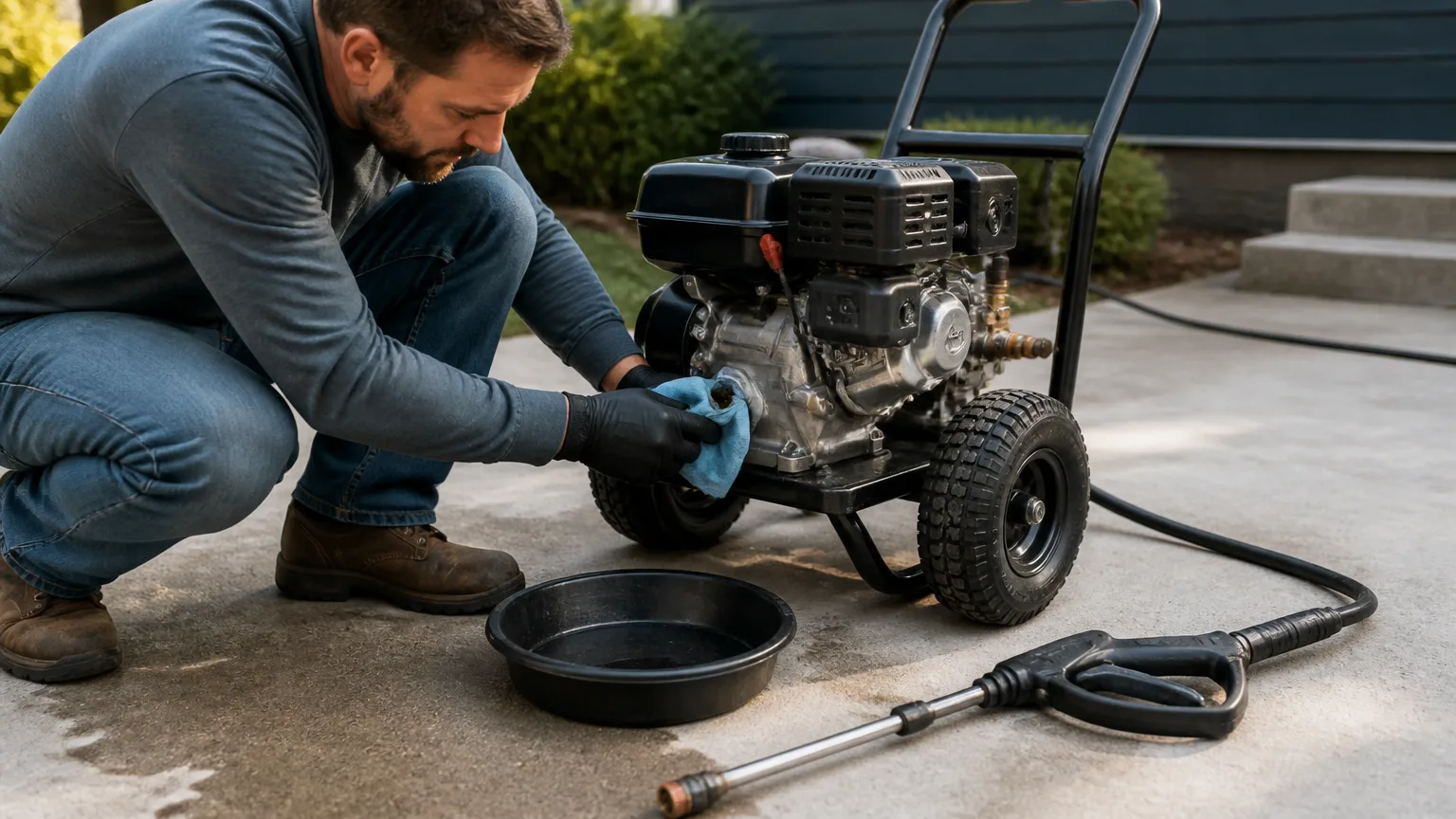
- Clean only the outside of the suspected area. Wipe away old residue with shop towels. Avoid spraying the engine with a pressure washer, and do not use flammable cleaners around a hot engine or ignition components. A clean surface makes fresh oil easier to trace.
- Check the oil level using the exact engine manual’s method. Dipstick procedures vary: some engines use a threaded dipstick reading while others specify checking it without threading the cap in. Keep the engine level and do not overfill it.
- Look at the highest wet point, not the lowest drip point. Oil can run down the engine, frame, pump bracket, and wheels before it falls. The bottom of the frame rarely identifies the source.
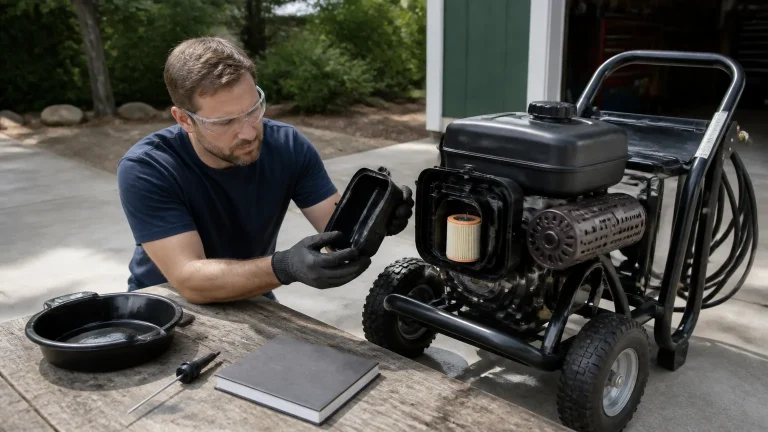
- Inspect simple external points before suspecting a seal. Check the oil fill cap and dipstick seal, drain plug and sealing washer, valve-cover perimeter, and any visible breather hose or air-cleaner housing.
- Recheck after a short, supervised run only if the oil level is safe and the leak is minor. Reconnect the spark-plug wire, operate outdoors with water supplied, and keep clear of moving parts. Shut the engine down promptly if fresh oil appears rapidly, reaches the muffler, or the engine runs abnormally.
Common leak locations and what they can mean
Oil fill cap or dipstick area
This is among the most manageable sources of a pressure washer engine oil leak. A loose cap, damaged cap seal, cross-threaded cap, or oil spilled during topping off can leave oil around the filler neck. Wipe the area clean, confirm the oil is not above the specified full mark, and reinstall the cap by hand as directed in the manual.
If oil keeps pushing out around the cap, do not simply tighten it harder. Overfilling, severe tilting, or excessive crankcase pressure may be involved. An engine that also smokes, surges, or has oil in the air-cleaner housing should be evaluated more carefully.
Drain plug or sealing washer
Fresh oil at the lowest part of the engine shortly after an oil change often deserves a close look at the drain plug. The plug may be loose, the sealing washer may be missing or damaged, or dirt may have prevented a clean seal. Do not guess at tightening torque or substitute an improvised washer. Follow the manual for that engine and use the specified parts.
If the plug threads are damaged, stop there. Crankcase-thread repair can be model-specific and a mistake can turn a serviceable engine into a replacement decision.
Valve cover or upper-engine seam
Oil wetting the upper side of the engine and then running down may come from a valve-cover gasket or fasteners. Heat cycles and vibration can contribute, but oil can also be carried there from a breather or spill. A valve-cover gasket replacement may be reasonable for an experienced owner when the exact engine manual provides the procedure. It is not a good place for sealants, overtightening, or trial-and-error fastener adjustments.
Air cleaner or breather area
Oil near the air filter can follow an overfill or a washer that was transported or stored on the wrong side. Correct the oil level only after checking it on level ground and according to the manual. Inspect the air filter as well. A saturated, deteriorated, or improperly seated filter should not be ignored, because it can affect engine operation and allow dirt into the intake.
Crankshaft seal near the pump or recoil starter
A small engine oil seal leak may show up where the crankshaft exits the engine—behind the recoil starter on one side or near the pump/coupler on the other. Fresh oil thrown onto a wheel, frame, pump mounting area, or rotating components makes this more likely. The actual source can be difficult to see because guards, pump hardware, and accumulated grime obscure the area.
This is usually a repair limit for most owners. Access may require removing the pump, coupling components, recoil assembly, or engine parts. The correct seal, installation depth, shaft condition, and reassembly details are model-specific. Do not remove guards or defeat safety devices to watch a suspected seal while the engine is operating.
When an oil leak may be a simple correction
A modest pressure washer oil leak repair decision can lean toward a do-it-yourself correction when all of the following are true:
- The leak is clearly from spilled oil, a loose fill cap, or a drain plug and washer that were recently serviced.
- The engine oil level is within the manual’s specified range after correction.
- No oil is reaching the muffler, belt area, tires, or other moving components.
- The engine starts and runs normally, without unusual smoke, knocking, loss of power, or repeated low-oil shutdown.
- You can obtain the exact manual and specified replacement part if one is needed.
After correcting a minor external issue, clean the area again and check it before each use. A stable oil level and a dry engine after several normal operating periods are better evidence than a single clean-up.
When to stop and use a service professional
Arrange professional diagnosis, or consider replacement, when you find any of these conditions:
- Oil is dripping steadily, leaving a growing puddle, or reaching the hot muffler.
- The source appears to be a crankshaft seal, crankcase seam, head gasket area, or damaged casting.
- The engine oil repeatedly falls between uses or between short operating periods.
- The washer was dropped, the engine shaft appears bent, the pump coupling is damaged, or the unit vibrates unusually.
- The engine smokes heavily, has oil contamination in the intake, is difficult to pull over, or runs poorly alongside the leak.
- The engine and pressure-washer model information cannot be matched to the correct manual and parts diagram.
An external gasket can be a sensible repair on an otherwise sound machine. A crankshaft seal leak combined with shaft damage, an aging pump, or multiple engine problems may not be. Compare the professional repair estimate with the condition of the engine, pump, hose, gun, frame, and availability of replacement parts—not just the size of today’s oil spot.
Do not confuse an engine leak with fuel-contaminated oil
Oil that is unusually thin, strongly smells of gasoline, or rises above the normal full mark is not simply an external leak problem. Do not run the pressure washer until the cause is addressed. Fuel dilution can reduce lubrication and can create a separate safety concern. Our guide to Pressure Washer Gas in Oil: Causes, Safety Steps, and Repair Decisions explains the safe next steps.
Bottom line
A gas pressure washer leaking engine oil is often traceable with a cool engine, a clean exterior, level-ground oil check, and a patient inspection from top to bottom. Start with the fill cap, drain plug, sealing washer, spill history, and signs of overfill or improper transport. Treat oil from a crankshaft area, a cracked case, or any location near hot or moving parts as a reason to stop using the washer and consult the exact owner’s manual or an authorized service professional.