Pressure Washer Exhaust Is Smoking: Oil, Air Filter, and Engine Checks
Pressure washer exhaust smoking is usually an engine issue rather than a pump issue. The smoke color, when it began, and whether the machine was recently tipped or serviced can narrow the possibilities quickly. White or blue-tinged smoke often means engine oil is reaching the combustion chamber. Black smoke more often points to an overly rich fuel-and-air mixture, including a restricted air filter, excess oil, stale fuel, or a flooded carburetor.
Safety first: Shut the engine off, let the muffler cool, and work outdoors on level ground. Never run a gasoline pressure washer in a garage, shed, basement, or other enclosed or poorly ventilated space; engine exhaust can contain deadly carbon monoxide. Keep fuel and cleaning chemicals away from hot engine and exhaust parts.
Do not keep running a heavily smoking engine simply to “clear it out.” A brief puff after an oil spill or an accidental tip may fade after the underlying cause is corrected, but persistent smoke deserves a methodical check. Use the oil type, oil-level method, service intervals, and tilt guidance in the exact engine or pressure-washer owner’s manual. If the engine is knocking, losing power badly, leaking fuel, or smoking continuously after the basic checks, stop and arrange service with an authorized small-engine professional.
Pressure washer exhaust smoking: start with the color and timing
Exhaust appearance is a clue, not a complete diagnosis. Look at it in daylight and note what changed immediately before the problem started.
- White or blue smoke: commonly associated with oil being burned. It may follow overfilling, tipping the machine, transporting it on its side, oil entering the air-cleaner area, or a more serious internal engine problem.
- Black smoke: usually indicates too much fuel or too little air. A dirty or damaged air filter, an overfilled crankcase, old fuel, or carburetor flooding are reasonable first checks.
- Light vapor that disappears quickly: may be moisture in a cool exhaust system. If it has no oily smell, does not linger, and the engine otherwise runs normally, observe it rather than assuming an engine failure.
- Smoke after an accidental tip: often means oil migrated toward the air cleaner, breather, carburetor, or cylinder. Correcting the oil level and letting the machine sit upright can be more important than immediately disassembling parts.
Also separate engine smoke from water vapor or spray drifting around the machine. Confirm that the smoke is actually leaving the muffler. A pump leak, a damaged hose, or a hot water source can create mist, but those conditions do not create exhaust smoke.
Use this diagnostic order before replacing parts
- Stop the engine and place the washer on a level surface. Move it into open air if necessary, turn the engine off, close the fuel valve if equipped, and allow hot parts to cool.
- Think back to the trigger event. Did the pressure washer get tipped, transported sideways, overfilled with oil, stored for months, or operated in unusually dusty conditions? The timing matters.
- Check engine-oil level correctly. Follow the manual’s dipstick instructions exactly. Some engines specify checking with the dipstick resting in the filler neck; others specify threading it in. Do not guess. An oil level above the full mark can lead to smoke and oil contamination around the air cleaner.
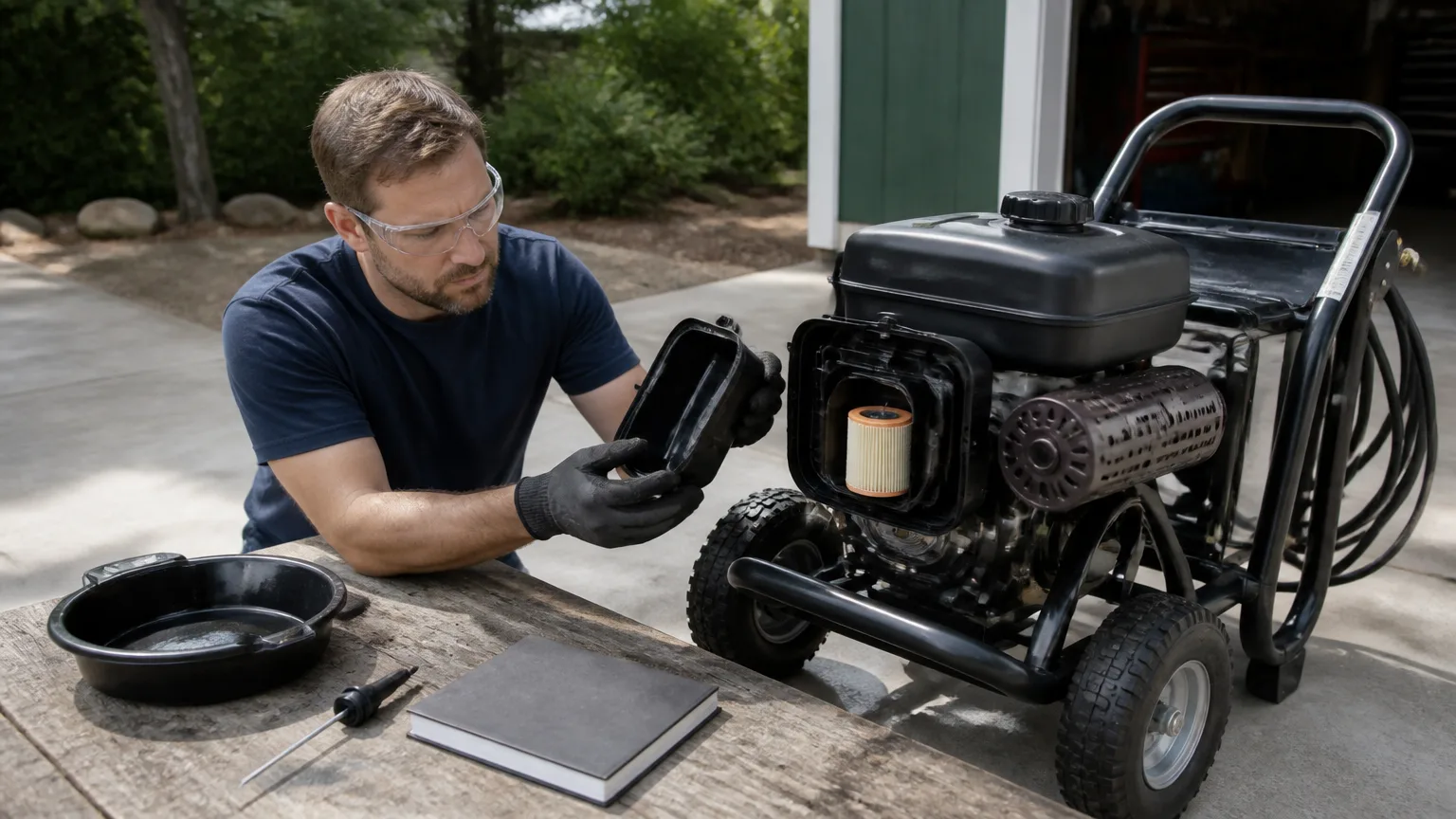
- Inspect the air-filter compartment. Remove the cover only with the engine off and cool. Look for a dirty paper element, a foam element that is overly saturated with oil, liquid oil pooled in the housing, or a displaced filter. Keep dirt from falling into the intake.
- Assess the fuel and starting behavior. A strong fuel odor, black smoke, rough running, or a no-start after repeated choke use can fit an over-rich or flooded condition. Use fresh fuel that meets the manual’s requirements; do not spray flammable cleaners or starting fluids around a hot or running engine.
- Restart only after reassembly. Reinstall the correct, dry or properly serviced filter and cover before operating the engine. Run the washer outdoors with water connected and flowing as directed by its manual. Watch whether the smoke rapidly diminishes, remains steady, or worsens.
- Escalate persistent symptoms. Ongoing blue/white smoke after the oil level and air cleaner are corrected can indicate a crankcase breather issue, gasket problem, or cylinder/ring wear. Those checks can be model-specific and may require professional diagnosis.
When a pressure washer is blowing white smoke or blue smoke
When a pressure washer is blowing white smoke, the smoke may actually look blue-white in sunlight. On a small four-stroke engine, that pattern commonly means oil is being burned. Before assuming major engine damage, focus on the simple oil-related causes.
Oil level is too high
Overfilling is one of the most common causes of pressure washer exhaust smoking after an oil change or top-off. Excess oil can be forced into areas where it does not belong, including the air-cleaner housing. Honda notes that an overfilled engine can transfer oil to the air cleaner and filter, with white or blue smoke from the muffler as a possible sign.
Check the level only when the washer is level and the engine has been off long enough for the oil to settle. If it is over the full mark, do not run it until the excess is removed using the procedure specified for that engine. Avoid draining oil onto the ground, driveway, or pressure-washer frame. Dispose of used oil properly.
The pressure washer engine is smoking after tipping
A pressure washer engine smoking after tipping is a familiar situation. Tipping can let crankcase oil travel through the breather system and into the air-cleaner or intake side. Briggs & Stratton cautions against sharply tipping an engine because oil can drain into the carburetor and air cleaner. The correct machine orientation varies, so the owner’s manual is the authority for your specific engine and washer frame.
Set the unit upright on level ground and inspect the oil level and air-filter housing. If oil is present in the housing or filter, service or replace the filter as the manual directs. A paper filter that is oil-soaked, damaged, or no longer fits properly should not be reused. If the machine briefly smokes after proper reassembly but clears, monitor it closely. If it continues to smoke, runs unevenly, or fouls the spark plug, stop using it and seek service.
Foam filter contains too much oil
Some engines use an oiled foam filter or a foam pre-cleaner. That design needs only the amount and method of oiling specified in the manual. Excess oil left in a foam filter can cause smoking on startup. Do not substitute a random filter material or run without the filter because unfiltered air can accelerate engine wear.
When a pressure washer is blowing black smoke
A pressure washer blowing black smoke is usually running rich: the engine has more fuel than it can burn cleanly for the available air. Start with maintenance items before suspecting an internal engine failure.
Check the air filter first
A dirty filter can restrict incoming air and contribute to black exhaust, rough running, reduced power, and poor fuel economy. Remove the air-filter cover carefully, then inspect the element rather than just tapping it and putting it back. Replace a paper cartridge that is visibly dirty, damaged, wet with fuel or oil, or poorly seated. Service a foam element only as the manual specifies. Briggs & Stratton’s air-filter guidance also emphasizes locating the engine model and using the matching manual and replacement part information.
Clean the housing gently with a dry or slightly damp cloth as appropriate, while preventing debris from entering the intake. Do not blast compressed air into the carburetor opening, and do not operate the engine with the filter removed.
Consider stale fuel or a flooded carburetor
Fuel that has sat too long can cause poor combustion and carburetor trouble. If black smoke started after storage, or if repeated starting attempts left a strong gasoline smell, drain and replace fuel only according to the manual and local disposal requirements. Check that the choke is returned to the run position after the engine starts; leaving it on can make an engine run rich.
Carburetor adjustment, cleaning, and rebuilding procedures vary by engine. Avoid turning mixture screws or removing fuel-system parts unless the exact manual gives instructions and you are comfortable performing the work safely. A professional can determine whether the carburetor is flooding because of a sticking float, worn needle valve, contamination, or another fault.
Signs the smoke is more than a basic maintenance issue
Small engine smoke diagnosis becomes more urgent when the simple checks do not change the symptom. Arrange qualified service if you find any of the following:
- Blue or white smoke continues after the washer has been upright, the oil level is correct, and the air filter is properly serviced.
- The oil level repeatedly drops between uses, or fresh oil appears around the crankcase, breather, or muffler area.
- Black smoke continues with a clean, correctly installed air filter, fresh fuel, and the choke fully off.
- The engine has low power, hard starting, surging, knocking, repeated spark-plug fouling, or excessive oil consumption.
- There is visible fuel leakage, a damaged muffler, flames or sparks from the exhaust, or an unusual hot-metal smell.
Possible underlying causes include a restricted or failed crankcase breather, an air leak, head-gasket damage, worn piston rings, cylinder wear, or a carburetor fault. These are not universal diagnoses from smoke alone, and internal repair decisions should be based on the correct engine manual and a hands-on inspection.
Do not confuse engine smoke with a pressure-washer pump problem
Exhaust smoke comes from the engine, but it can appear at the same time as a separate pressure-washer issue. For example, a washer that bogs down only when the trigger is pulled may have a pump-load or unloader concern in addition to an engine tune issue. See our guide to a pressure washer engine that stalls when the trigger is pulled for a safe way to separate those symptoms.
Likewise, do not diagnose smoke by running the washer without a reliable water supply. If the pump will not draw water after storage, address that problem separately using these pump priming and airlock checks. The engine and pump need their own checks, even though they operate together.
A practical next step
For most cases of pressure washer exhaust smoking, begin with the oil level, the air-filter condition, and recent handling history. An overfilled crankcase, an oil-soaked filter after tipping, or a restricted air filter can often explain the symptom without replacing engine parts. Correct the obvious issue, reassemble everything properly, and observe the machine outdoors.
If smoke persists or returns, avoid repeated test runs. Consult the exact owner’s manual for your engine model or use an authorized service professional. That approach protects the engine, reduces the chance of a fuel or exhaust hazard, and prevents a minor maintenance issue from becoming a larger repair.