Electric Pressure Washer Motor Hums but Will Not Run: Power, Capacitor, and Pump Checks
An electric pressure washer motor hums but will not start when the motor is receiving some power but cannot begin turning normally. The cause may be as simple as a weak power supply or water-side restriction, but it can also point to a binding pump, a failed start component, or internal motor trouble.
Safety callout: Unplug the pressure washer before inspecting the cord, nozzle, pump connections, or housing. Keep plugs and connectors dry, use a properly functioning GFCI-protected outlet, and do not open an electrical enclosure or touch internal wiring unless the exact owner’s manual authorizes the work and you are qualified to do it.
A humming sound is not a reason to keep cycling the switch. If the motor cannot rotate, continued energized humming can overheat electrical components. Turn it off, unplug it, and work through the low-risk checks first.
Why an electric pressure washer hums but will not start
Many corded pressure washers use a motor that needs adequate line voltage and a free-moving pump to start under load. A restriction in the water system, pressure trapped in the pump, a long undersized extension cord, or a mechanical bind can make starting difficult. On some designs, the start circuit includes a capacitor. If that component has failed, the motor may buzz without spinning even though the outlet and pump appear normal.
The exact design varies by model. Some units have different controls, motor types, and pump arrangements, so treat the owner’s manual as the final authority. Do not assume a capacitor is present just because the pressure washer motor buzzes but does not spin.
Use this diagnostic order before considering a capacitor
- Stop the unit after the first failed start. A brief hum can be useful evidence, but repeated attempts can create more heat and may worsen a motor or start-circuit problem.
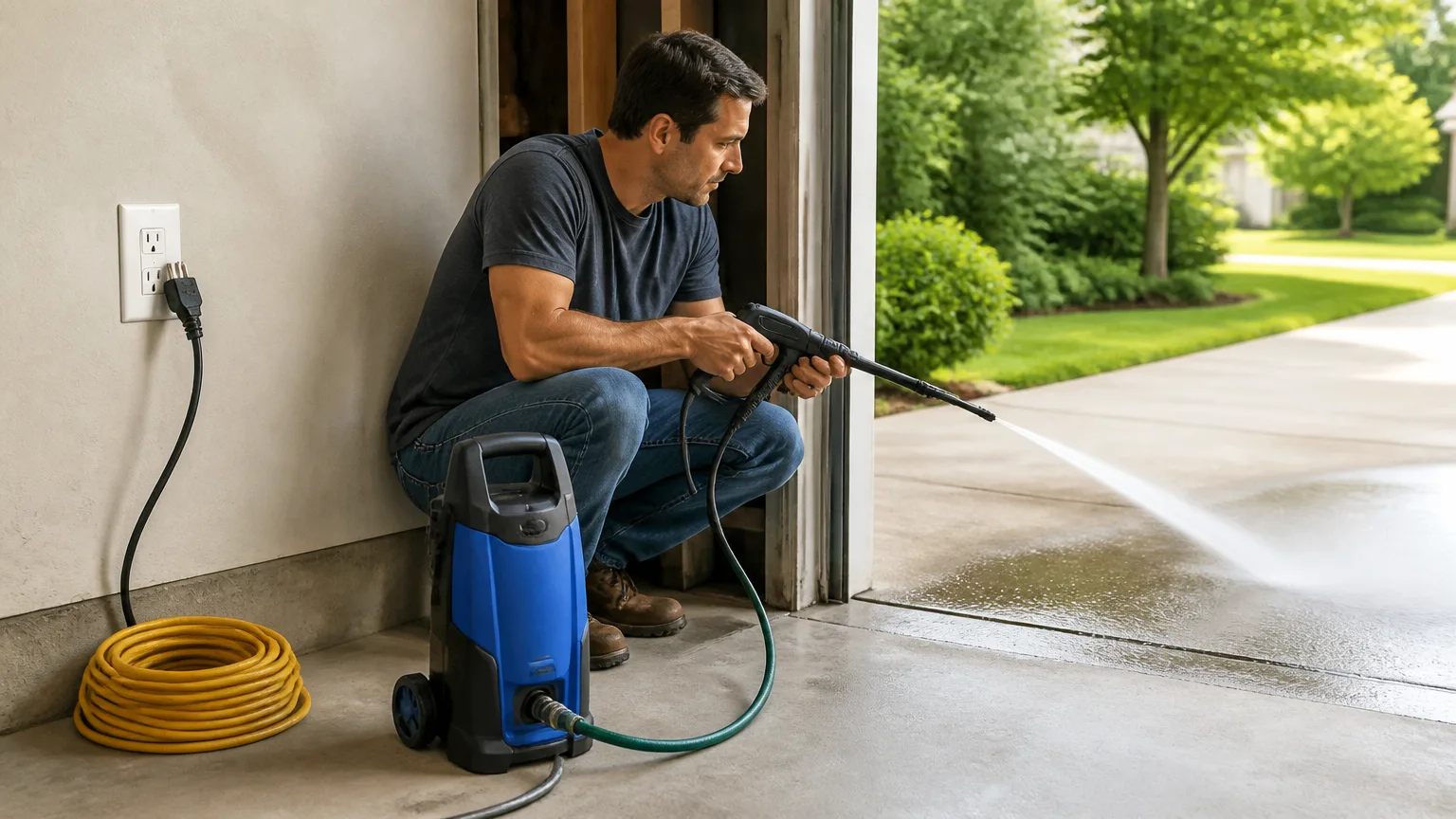
- Confirm a suitable power source. Plug the washer directly into a known-good GFCI-protected wall outlet, with no extension cord, power strip, splitter, or adapter. Reset the GFCI only if it has tripped and the cord, plug, and work area are dry and undamaged.
- Inspect the washer cord and plug. Look for cuts, flattened sections, loose blades, heat damage, a cracked plug body, or damage where the cord enters the machine. Take the washer out of service if you find damage.
- Set up the water supply correctly. Connect the garden hose, fully turn on the water, and check that the inlet screen is installed and clear. Do not run the pump dry.
- Release trapped pressure. With the washer switched off and the water supply on, squeeze the trigger until water flows steadily. This reduces pressure the motor may otherwise have to overcome at startup.
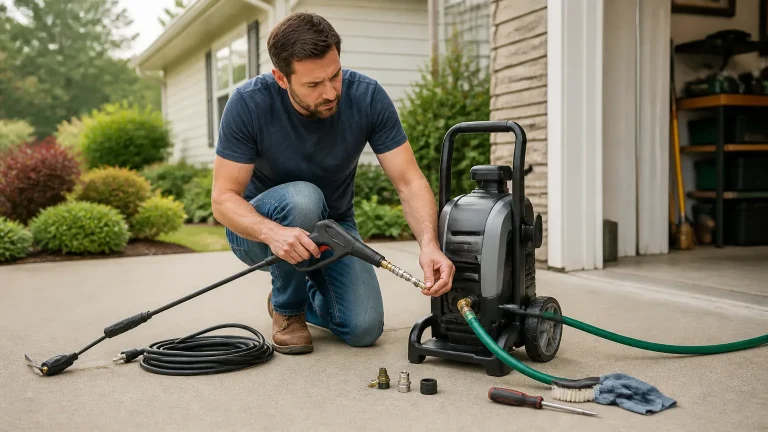
- Remove and inspect the spray nozzle. A clogged or unsuitable nozzle can add abnormal restriction. Clean or replace it only as the manual directs. See our guide to a pressure washer nozzle that is clogged for a careful cleaning approach.
- Try one controlled restart. With water flowing through the gun and the unit connected directly to the wall outlet, turn it on. If it starts, reinstall a clean, correct nozzle and observe whether the problem returns.
Check direct outlet power before blaming the pressure washer
A pressure washer is a high-demand corded appliance. A receptacle may power a light or phone charger yet still perform poorly when the washer attempts to start. Start with a dry, properly grounded GFCI-protected outlet that is not shared with another high-load device.
If the washer operates normally when plugged directly into the outlet but gives an electric pressure washer makes humming noise symptom on an extension cord, the cord arrangement is the likely problem. Do not continue using that setup just because it eventually starts.
How extension-cord voltage drop can create a hum
Every cord adds resistance. A longer cord and a smaller conductor can reduce the voltage available at the pressure washer when the motor needs its highest starting current. That reduced voltage can leave the motor unable to develop enough starting force, producing a hum or buzz instead of normal rotation.
Use no extension cord when the manual says not to. If your manual permits one, use only the cord type, wire gauge, maximum length, and outdoor-use rating specified for that exact model. Manufacturer guidance differs: one manual may permit a correctly rated outdoor cord, while another may prohibit extension-cord use entirely.
Do not use a cord that is warm, damaged, repaired, pinched in a doorway, missing its grounding prong, or exposed to standing water. OSHA guidance also emphasizes three-wire, hard- or extra-hard-service cords for portable equipment and removal of damaged cords from use.
If a GFCI outlet trips rather than merely humming, stop troubleshooting the motor and address the electrical fault safely. Our article on an electric pressure washer that trips a GFCI outlet explains the safe first checks.
Rule out trapped pressure, water-supply problems, and nozzle restriction
The pump and motor work together. A pump that is loaded by trapped pressure or poor water flow can make the motor struggle at startup. This does not mean every humming unit has a failed pump, but it makes the water-side setup worth checking before internal electrical parts.
Start with an unpressurized system
Turn the washer off, leave the garden hose on, and hold the trigger until water runs freely. This step helps purge air and releases pressure in the hose and pump. Keep the nozzle removed only if the manual permits that troubleshooting step; never point the open wand at people, pets, electrical equipment, or surfaces that could be damaged by water.
Look for simple inlet restrictions
- Confirm the supply faucet is fully open.
- Straighten a kinked garden hose.
- Inspect the inlet screen for debris without forcing or puncturing it.
- Verify that the garden hose and connections are supplying a steady flow of water.
- Check for a damaged, collapsed, or sharply kinked high-pressure hose.
A restriction at the nozzle is also worth addressing. If the washer starts with the nozzle removed but stalls or shuts down after a particular nozzle is installed, stop using that nozzle and compare it with the model’s approved nozzle types. Do not enlarge an orifice or substitute an unknown nozzle to make the machine run.
When an electric pressure washer seized pump is possible
An electric pressure washer seized pump is a plausible concern when power and water setup check out but the motor hums consistently and never turns. Long storage, freeze damage, internal corrosion, contaminated water, or a mechanical pump failure can prevent rotation. A locked pump places a heavy load on the motor, and the motor may only buzz.
External clues can include a pump that leaks, a unit that was stored after freezing conditions, obvious damage around the pump, or a washer that previously ran rough and then stopped. Those clues are not conclusive, and a pump can bind internally with little visible evidence.
Do not try to force the motor or pump shaft with improvised tools, and do not disassemble the pump simply to see whether it will free up. Pump service can be model-specific, and internal parts may remain under pressure or require seals, torque values, and assembly procedures from the manufacturer. Consult the exact manual or an authorized service professional when a pump bind is suspected.
Could the capacitor be bad?
A failed start or run capacitor is one possible explanation when an electric pressure washer motor hums but will not start, especially after the washer has been confirmed to have proper direct outlet power and no obvious water-side load. A capacitor-related failure can leave a conventional motor energized but unable to create the starting action it needs.
However, this diagnosis is not universal. Some pressure washers use motor designs or electronic controls that do not use a user-serviceable capacitor. A hum can also come from a jammed pump, defective switch, damaged wiring, thermal protection, control board, or motor winding problem.
What to do instead of guessing
- Find the exact model number and retrieve its owner’s manual and parts or service information.
- Check whether the manufacturer identifies a capacitor and whether it is intended to be serviced separately.
- Do not open the motor housing while connected to power.
- Do not replace a capacitor based only on its appearance or a generic online parts match.
- Use an authorized service professional for capacitor testing, wiring diagnosis, motor repair, or any work that requires opening an electrical enclosure.
Capacitors can retain an electrical charge after the tool is unplugged. That is another reason this is usually a service decision rather than a casual DIY repair.
What the sound and behavior can tell you
One short hum, then silence
This may indicate a protective device, GFCI, switch, or control issue. Check the outlet and cord first, but do not keep resetting a device that trips or immediately shuts the washer down.
A steady hum with no motor movement
This pattern raises concern for low supply voltage, a binding pump, a start-circuit fault, or internal motor trouble. Disconnect the washer after the brief observation and follow the basic power and water checks.
The motor starts only with the nozzle removed
Focus on nozzle restriction, trapped pressure, and correct water flow. Use only the supplied or manual-approved nozzle arrangement.
The washer starts directly at the wall but not on an extension cord
This is strong evidence of a pressure washer extension cord voltage drop or an extension cord that the manufacturer does not allow. Stop using the cord setup and follow the exact manual’s requirements.
When to stop and arrange service
Professional diagnosis is the sensible next step when the washer hums on a direct wall connection after pressure has been released and water flow has been confirmed. Also stop if you smell hot insulation, see smoke, find a damaged cord or plug, hear grinding, notice water entering the electrical housing, or see damage after freezing conditions.
Do not attempt to bypass a switch, GFCI, thermal protector, or other safety device to make the machine start. The practical repair may be a pump assembly, motor component, switch, cord set, or complete unit, but the right choice depends on the exact model, condition, parts availability, and a qualified diagnosis.
The bottom line
When an electric pressure washer motor hums but will not start, begin with a direct, dry GFCI-protected outlet; eliminate extension cords; release pressure; verify water flow; and inspect the nozzle and inlet screen. If the unit still only hums, a seized pump or electrical start-system problem becomes more likely. Avoid repeated start attempts and leave internal motor, capacitor, and pump repairs to the procedures in your model’s manual or an authorized service professional.