Pressure Washer Thermal Relief Valve Leaking Water: Normal Operation or a Pump Problem?
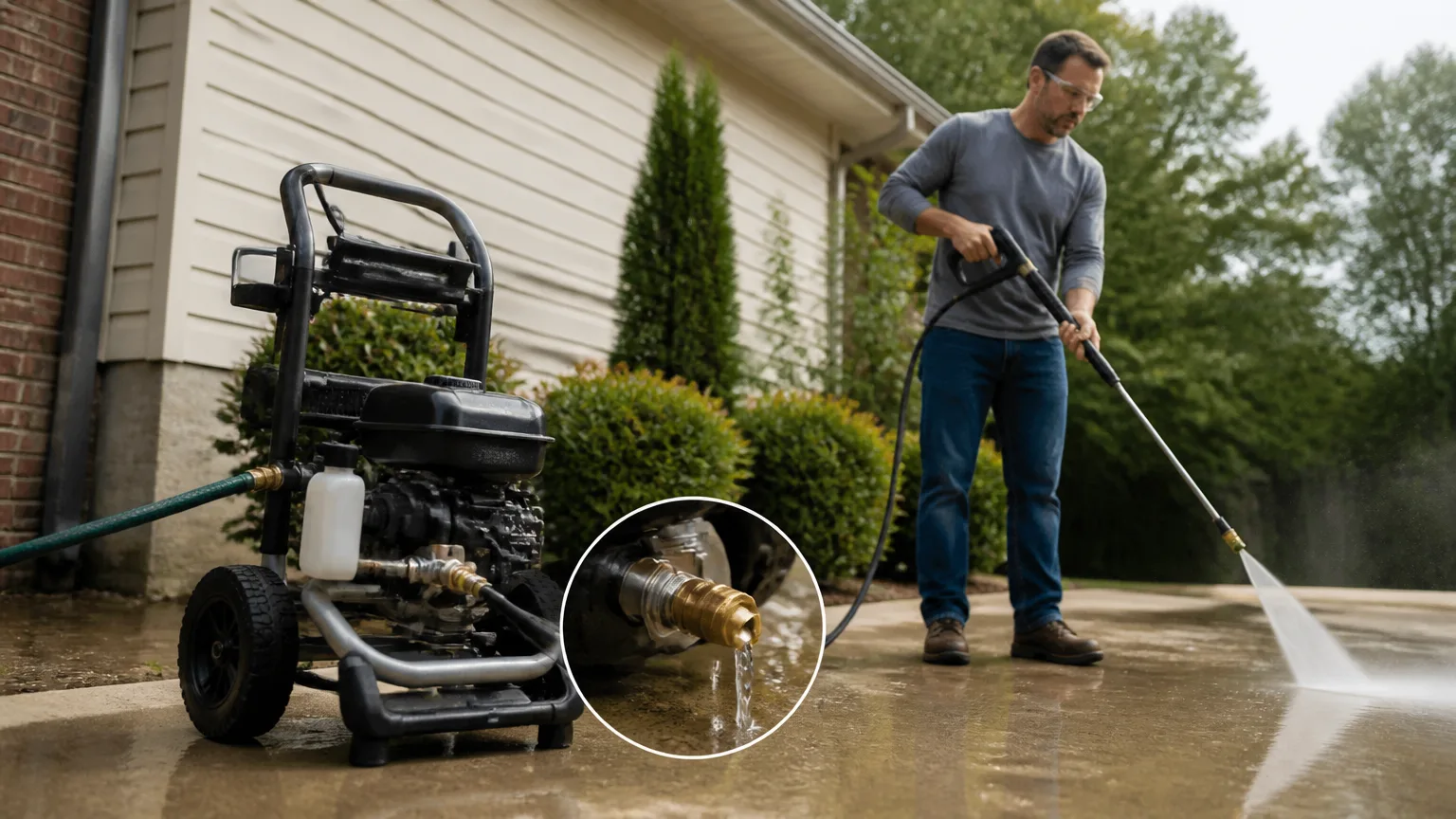
A pressure washer thermal relief valve leaking water can look alarming, especially when the water seems to come directly from the pump. In many cases, though, a brief discharge is the valve doing its intended job: releasing overheated water after the machine has been left running with the trigger closed.
That does not mean every leak at this location is harmless. The useful distinction is when the water appears, how long it continues, and whether the washer still builds and holds normal pressure. A valve that releases a short burst after extended idling usually points to heat buildup in bypass mode. Water that drips or sprays during active washing, immediately after startup, or repeatedly despite proper operation can point to a sticking valve, a water-supply problem, an unloader issue, or pump damage.
Safety: Shut the engine or motor off before inspecting the pump area. Point the spray gun in a safe direction and relieve trapped pressure according to the exact owner’s manual. Hot discharge water and high-pressure spray can cause injury; keep hands away from the valve outlet and never block, plug, or bypass it.
What the thermal relief valve on a pressure washer does
The thermal relief valve on a pressure washer is a pump-protection device. When you release the trigger but leave the engine or motor running, the pump’s unloader routes water internally in a bypass loop. Because that same water is recirculating rather than being replaced by cooler incoming water, its temperature can rise quickly.
If the water reaches the valve’s operating temperature, the valve opens and dumps hot water to the ground. Cooler supply water can then enter the pump. On many consumer units, the valve closes again after the pump cools. Simpson describes this as a safety feature for an overheating pump in bypass mode, while Generac owner’s literature describes the pump being cooled by discharging water after several minutes without spray-gun activation.
In plain terms, pressure washer releases hot water when idling is often normal—but it is also a warning that the washer has been idling too long. The proper response is not to wait for another discharge. Turn the unit off if you will pause from spraying, then resume only when ready to work.
When pressure washer thermal relief valve leaking water is normal
A thermal-relief discharge is generally consistent with normal operation when all of these conditions apply:
- The washer had been running with the trigger released for several minutes.
- The water comes from the small valve on or near the pump, not from a hose fitting, manifold seam, or pump housing crack.
- The discharged water is noticeably warm or hot.
- The discharge stops after cooling and does not continue during normal trigger-on washing.
- The washer resumes producing normal pressure, with no unusual noise, pulsing, or visible pump leak.
The exact idle limit varies by machine, so the owner’s manual for the specific model controls. However, manufacturer guidance commonly warns against leaving a pressure washer running without spraying for more than a short break. Treat two minutes as a practical maximum unless your manual gives a different instruction.
Also consider the incoming water temperature. A garden hose lying in direct sun can deliver warm water before the washer has done any real work. That reduces the pump’s cooling margin and may cause the thermal valve to open sooner. Use a cold-water supply when the manual calls for it, and move the supply hose out of direct sunlight where practical.
When it suggests a pump problem instead
A thermal valve is not meant to serve as a routine drain or a permanent cure for an overheating pump. Investigate further if the valve leaks under any of the following conditions.
It drips while you are actively spraying
Water should not normally keep leaking from the thermal valve when the trigger is open and cool supply water is moving through the pump. A worn, contaminated, or damaged valve may not reseat correctly. Do not try to tighten, cap, or modify it. Consult the exact parts diagram and owner’s manual, or have an authorized service professional assess whether the valve is serviceable on your pump.
It opens very soon after startup
If the pressure washer thermal valve discharging water begins almost immediately, first rule out hot supply water and accidental extended idling. If neither explains it, the pump may not be getting enough water. A partially closed spigot, kinked garden hose, undersized supply hose, clogged inlet screen, or weak well-water supply can all reduce cooling flow.
Low inlet flow can also contribute to poor cleaning pressure, surging, and pump stress. If the spray pattern pulses or pressure repeatedly rises and falls, see Pressure Washer Pulsates When Trigger Is Pulled: Water Supply, Air, and Unloader Checks for a separate, safe diagnostic path.
The pump loses pressure, pulses, or makes abnormal noise
A thermal discharge does not prove the thermal valve itself is the only failed part. The underlying issue may involve the unloader, inlet-water restriction, worn pump seals, or internal pump components. Do not continue running a machine that repeatedly overheats in bypass. Continued heat cycling can worsen seal damage and, in severe cases, contribute to cracks or leaks.
Look closely for water emerging from places other than the valve. A pump housing seam, manifold, oil area, or visible crack calls for a different diagnosis. Freezing can damage a pump body and fittings, so review Pressure Washer Pump Freeze Damage: Cracks, Leaks, and Replacement Decisions if the unit was stored where water could have frozen.
The water is not coming from the thermal relief valve
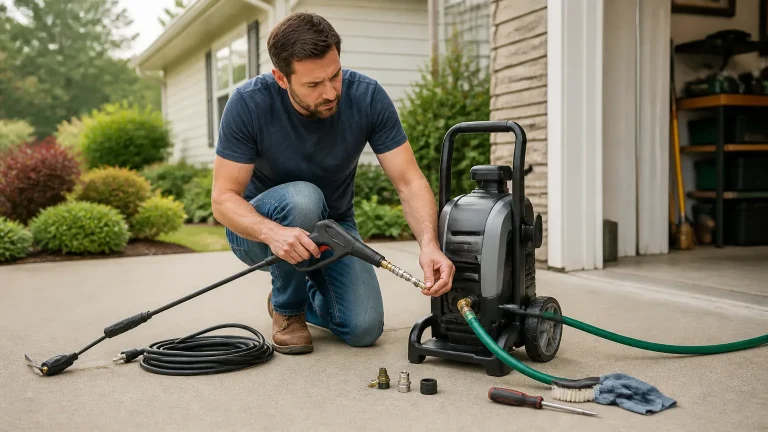
It is easy to misidentify the leak source because water runs across the pump frame. With the unit off and pressure relieved, dry the exterior and inspect carefully. Check the garden-hose connection, inlet filter area, high-pressure outlet, hose coupler, gun, and wand connections. A leaking quick-connect fitting or flattened O-ring can mimic a pump leak.
Safe diagnostic order for an overheating or leaking pump
- Stop the machine. Shut off the engine or motor, turn off the water supply, and relieve residual pressure exactly as directed in the owner’s manual.
- Confirm the source. Once cool, identify whether water truly came from the thermal relief valve rather than another fitting or the pump housing.
- Check your operating pattern. Consider whether the washer was allowed to idle with the trigger closed. Avoid leaving it in bypass during setup, moving ladders, changing tasks, or talking with someone.
- Check cold-water supply and flow. Fully open the spigot. Straighten kinks, avoid a crushed hose, and inspect the inlet screen only as the manual permits. Use a supply hose and water source that meet the machine’s stated requirements.
- Look for related symptoms. Note low pressure, pulsing, unusual vibration, oil contamination where applicable, or water leaking from the pump body. These observations help distinguish a simple overheating event from a pump fault.
- Test only after reassembly. Reconnect everything correctly, start with water flowing to the pump, and spray promptly. Do not intentionally idle the machine to see whether the valve opens.
- Escalate recurring problems. If the valve continues to leak while spraying, opens unusually fast, or the pump performance has changed, stop using the washer and consult the exact manual or an authorized service professional.
What not to do
- Do not plug, cap, clamp, or remove the thermal relief valve to stop water loss.
- Do not touch or stand over the discharge area while the washer is running; the released water may be hot.
- Do not run the washer without an adequate water supply or with a blocked inlet screen.
- Do not adjust the unloader or pressure-control components unless the manufacturer’s manual specifically provides a procedure for your model.
- Do not use a damaged electric pressure washer, wet cord connection, or defeated grounding/GFCI protection.
How to prevent repeat thermal-valve discharge
The prevention step is simple: organize the job so the washer runs only when you are ready to spray. Shut it down for breaks rather than allowing it to sit in bypass. Connect the water supply before starting, verify that water is flowing through the pump, and use the correct nozzle for the task so you are not repeatedly stopping to troubleshoot while the machine runs.
At the end of the job, follow the manual’s shutdown and storage steps. Drain water from the system as directed, especially before freezing weather. If your washer has already had repeated overheating events, inspect it more carefully before the next use rather than assuming the thermal valve alone prevented all damage.
The bottom line
A pressure washer thermal relief valve leaking water briefly after the washer has idled is usually normal protective action. It means the bypass water became too hot, the valve opened to shed that heat, and the machine needs a better shutdown habit during pauses.
It becomes a pump concern when the valve leaks continuously, discharges during active spraying, opens almost immediately with a cool and adequate water supply, or appears alongside pressure loss, pulsing, noise, or a separate pump-body leak. In those cases, stop repeated use and rely on the exact owner’s manual or an authorized service professional for model-specific repair decisions.